


Horizontally connects government, subdistricts, property management, residents, and merchants; vertically supports a multi-level structure spanning province, city, county/district, subdistrict, and community. It uses cloud computing, big data, artificial intelligence, Internet of Things and other advanced technologies to create a comprehensive urban community governance platform centered on three core businesses: good governance, public benefit, and thriving industries. It enables intelligent, digital, and convenient community services, improves community governance, and promotes harmonious community development.


Product Overview
Product Features
Aligned with urban community governance policies: Based on the national guidelines for municipal social governance, the platform provides customized business modules that fully meet the basic requirements of municipal social governance.
Rich data resources: The platform covers data resources across all aspects of social governance and services, creating a comprehensive data warehouse resource that integrates data collection, data analysis, and data sharing.
Multi-network integration and business collaboration: It integrates the business of multiple departments, including organization, political and legal affairs, publicity, urban management, emergency response, market supervision, and civil affairs, and merges single-function grids into all-purpose grids to enable cross-regional and cross-departmental business collaboration.
Comprehensive command and dispatch: The system can integrate data and information from multiple organizations, departments, enterprise resources, public resources, video resources, grid resources, and more to achieve comprehensive municipal dispatch and command.
Intelligent early warning and situational awareness: It uncovers data value, builds governance models, and provides intelligent forecasting, early warning, and decision analysis.
Mature modules and easy operation: The platform has been used by many users and is highly mature, stable, and reliable. The back-end business logic is complex, but the front-end operation is very simple, especially suitable for grassroots users.
Product Functions
Cockpit
Visualized and controllable real-time community situation, including the following functions:
Neural perception: early warning perception, fire safety perception, access perception, face perception, and vehicle perception;
Situational analysis: population analysis, housing analysis, vehicle analysis, event analysis, and device analysis;
Intelligent search: access control search, event alarm search, device query, face search, and vehicle search;
Video access: real-time video monitoring and distribution of video playback screens.

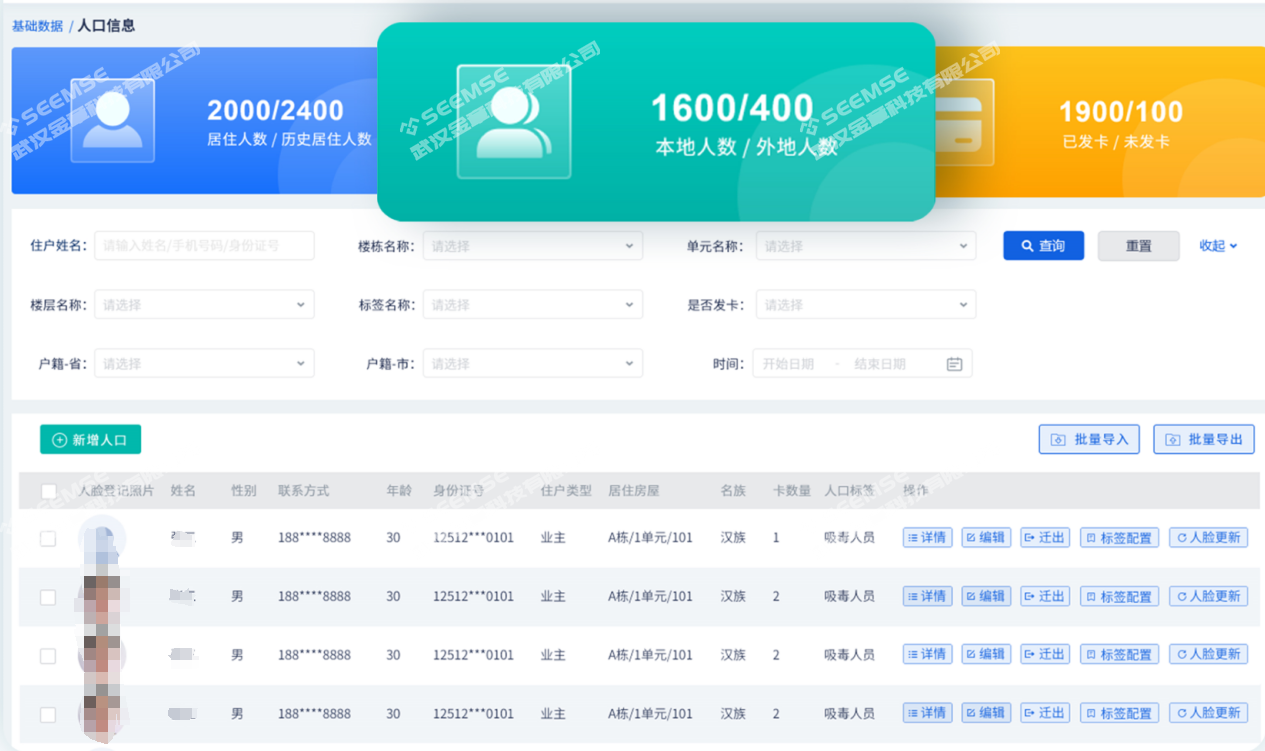
Community person, vehicle, housing, and tag information management
Routine and refined collection of basic information, including the following functions:
Resident management: resident registration and review, face entry, housing-vehicle relationship binding, resident move-out, etc.;
Vehicle management: management of changes in vehicle information;
Housing management: management of community buildings, housing units, and shops;
Tag management: refined management of person and housing types using tags.
Comprehensive Grid Governance
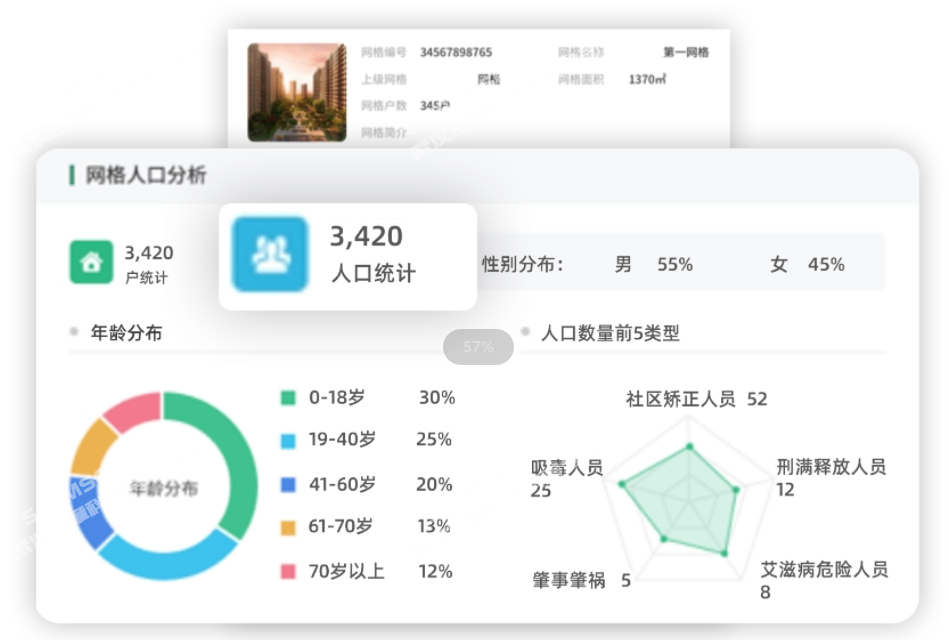
Flat and scientific community grid governance, including the following functions:
Task management: assigning task indicators to grid workers to test control over staff work content;
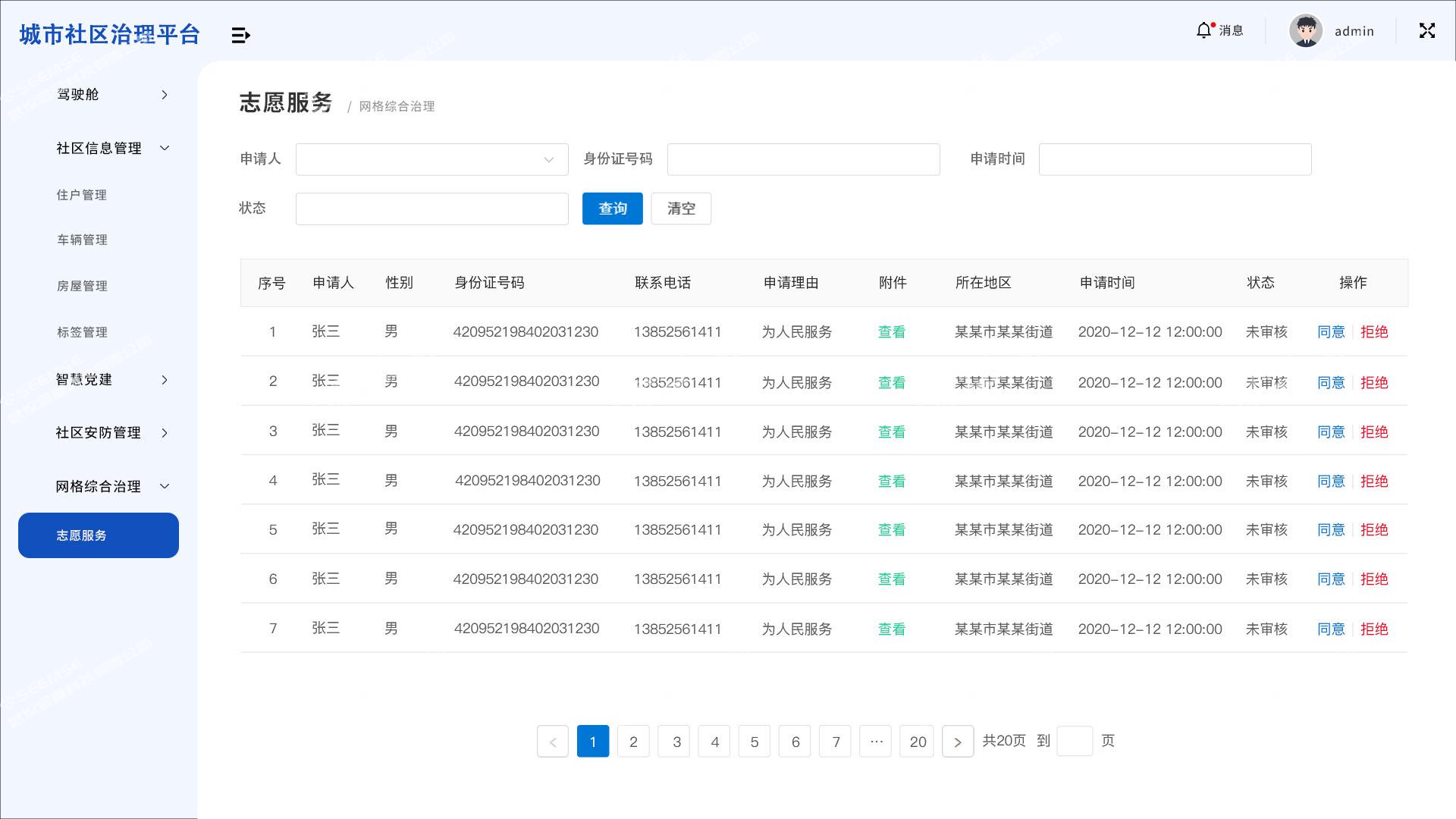
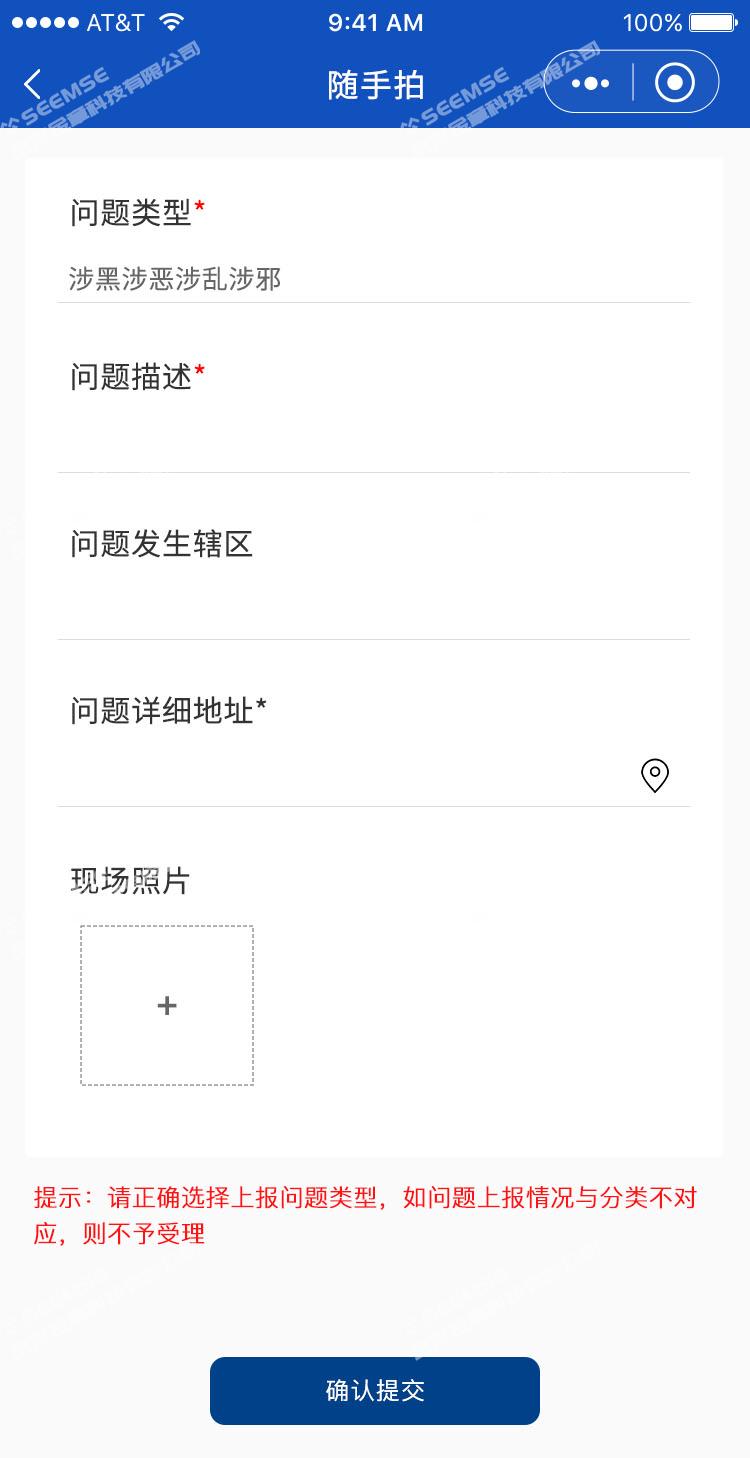
Volunteer service: volunteer application review and other operations on the platform, as well as publishing and managing volunteer activities;
Surveillance management: conducting surveillance on specified persons or vehicles through monitoring devices to track their real-time movements.
Property Service Management
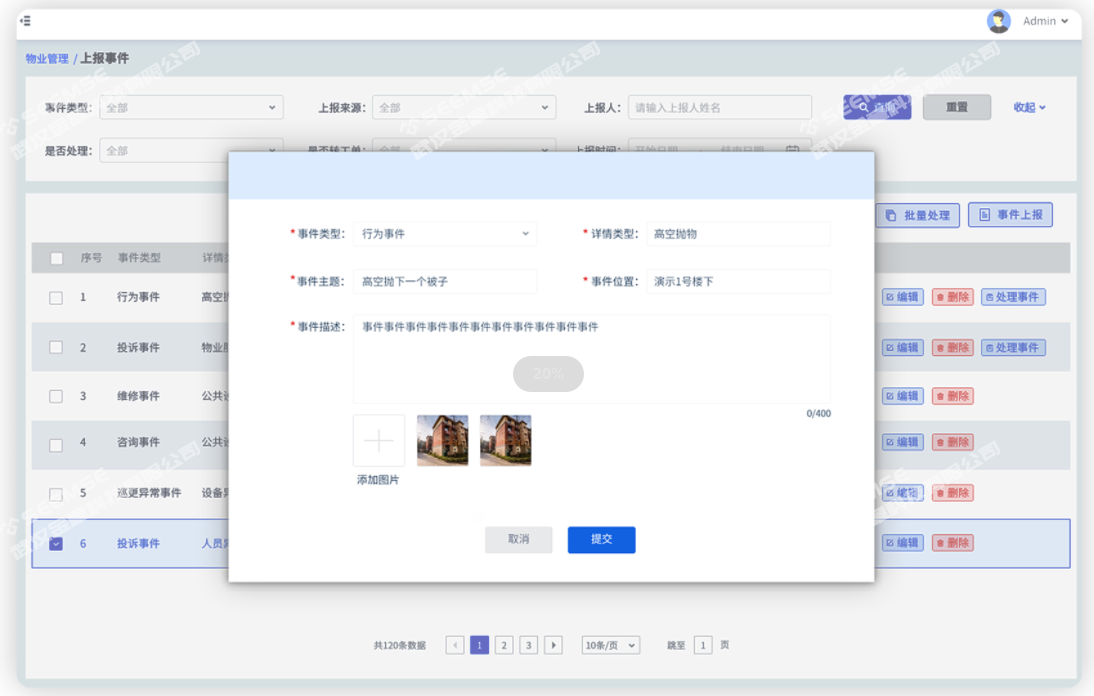
Integrated and convenient property management services, including the following functions:
Property management: management of platform announcements, activities and voting information, event work order process management, and review management;
Payment management: precise configuration for different charge types, with bills generated regularly according to rules for residents to pay;
Visitor management: viewing and exporting visitor application records;
Parking management: community parking area management, parking space management, and vehicle information.
Community Security Management
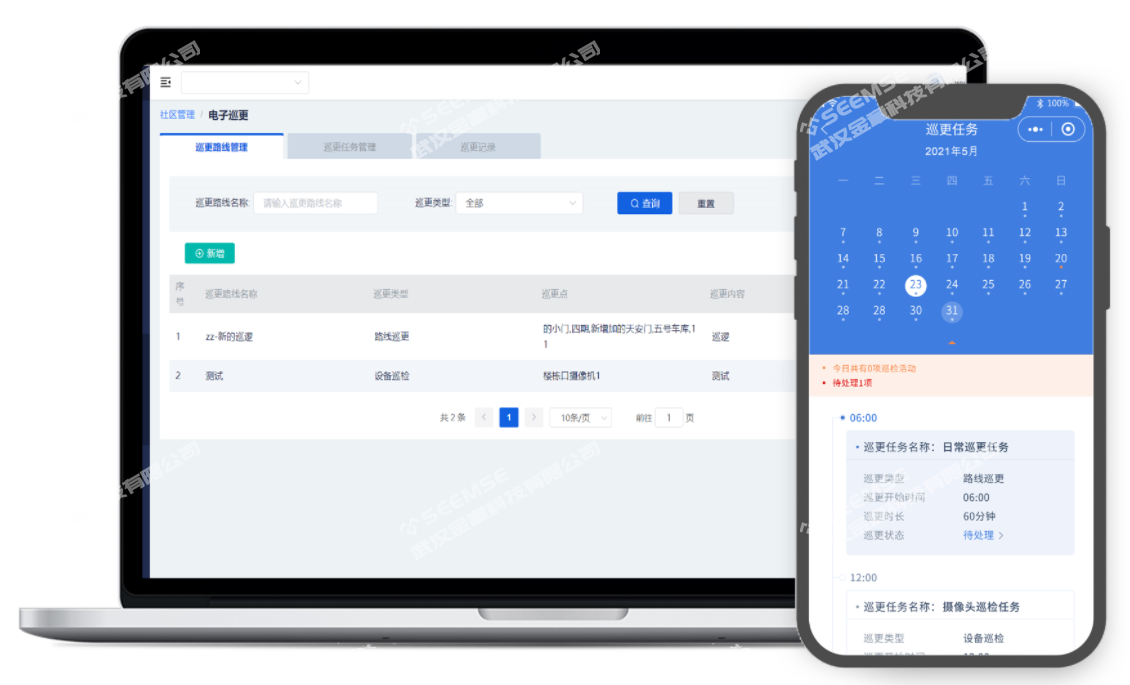
Intelligent and precise community security prevention and control, including the following functions:
Perception data: query and processing of device alarm information and person-housing alarm information;
Key population management: viewing information on key populations, management of key populations pending confirmation, and case closure and archiving records;
Personnel surveillance: real-time control of specified persons' movements through linkage with monitoring devices.
Smart Party Building
Efficient and diversified grassroots Party and mass work, including the following functions:
Organization management: online maintenance of Party organization and Party member information, and recording of Party member development;
Work development: organizing online learning for Party members, regularly carrying out public welfare activities, and showcasing the outstanding image of Party members.
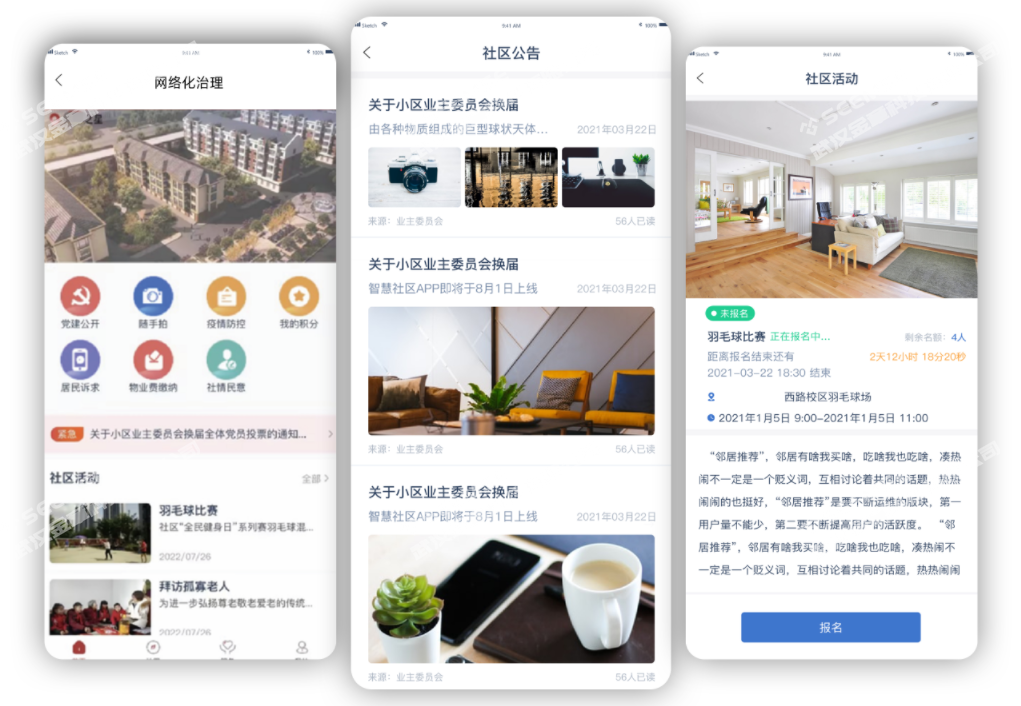
Product Advantages
The urban community governance platform is not merely a digital infrastructure project. Its fundamental goal is to complete the government's own digital transformation, use data thinking to transform past government work processes, build a new digital and intelligent government operating form, and continuously explore new governance models that fit actual work to the digital economy and digital society. In the process of building civilized cities, community basic work is often large in volume and complex. Platform-based community governance can effectively sort out work logic and processes and promote community co-governance and information sharing.
Optimize processes and improve efficiency
The urban community governance platform can effectively eliminate the drawbacks of traditional administrative processes in creation work, streamline administrative (service) processes, coordinate administrative or service costs, and achieve efficient administration and high-quality services in creation work.
Platform-based community governance introduces emerging digital technologies to break the 'government-society' organizational deadlock and build a new, modern organizational model. The flat new organizational structure expands the 'contact surface' between all levels of government and all sectors of society and all fields of civilized city creation, bringing community grassroots and units at all levels closer to the public and shortening the administrative processes, links, and cycles of civilized city creation. Integrated services coordinated by multiple departments provide the public with the services necessary for civilized living, thereby enhancing the public's service experience and effectively resolving the contradiction between the public's demand for intelligent creation work and the low efficiency of government governance.
Diversified supervision and consolidated results
The urban community governance platform can effectively supervise and consolidate creation results. Compared with traditional supervision systems, diversified and multi-dimensional supervision built on a community digital platform can more effectively consolidate the results of civilized city creation.
From the perspective of government supervision, promoting platform-based community governance helps make supervision positioning more precise; facilitates direct implementation of supervision work, avoiding scattered implementation forces and redundant supervision systems; and helps supervisory units promptly advance real-time supervision, real-time assessment, and deployment of rectification for creation work. From the perspective of social supervision, on the one hand, the application of platform-based community governance can increase multi-subject supervision channels, break the dilemma of 'no one supervises the supervisor,' and effectively address inaction such as 'lazy governance' in civilized creation work. On the other hand, platform-based community governance helps the public participate in the entire creation process, advances public participation in creating civilized cities, and improves creation quality.
One network for all, co-creation and co-governance
The urban community governance platform can realize the 'one network for all' service model for civilized cities. In the process of creating a civilized city, to comprehensively promote serving the people, implement services, and embed civilized services in people's hearts, it is necessary to build a new comprehensive and precise service model of 'one network for all' centered on a grid system, precise work, and socialized services, promoting a shift in community work style from 'extensive' to 'refined,' a shift in community service methods from 'wishful thinking' to 'people's needs-oriented,' and a shift in the subjects of civilized creation and social governance from 'single type' to 'co-creation and co-governance.'
Product Examples
===
===
===
FAQ
Q1: How is urban community governance different from rural and park governance?
A: Urban community governance manages people, housing, and vehicles in subdistricts and communities, and property management, residents, and merchants all participate. The rural version targets village areas, and the park version targets industrial parks, with different data models. SEEMSE (Jinzhang Technology) develops them separately by scenario.
Q2: Do existing access control and surveillance in the community need to be replaced?
A: No replacement is needed. The platform prioritizes connecting to existing access control, surveillance, and barrier gates and brings their data in. Only devices that are truly outdated and do not support integration protocols need to be replaced. We will first list the parts that can be reused to avoid tearing everything down and starting over.
Q3: Should property management companies use it together, or is it only for subdistricts?
A: Property management and residents are both included, but with different roles. Subdistricts and communities use it for governance and assessment; property management uses it to manage work orders, payments, visitors, and parking spaces; the resident side is used for reporting issues and filings; merchant data is connected as needed.
Q4: Who owns face and vehicle data, and how is it used compliantly?
A: The data is owned by the builder. The platform only collects and calls it and does not provide it externally. Sensitive information such as faces and vehicles is authorized on the principle of minimum necessity. Who queried it, whom they queried, and when are all recorded for audit at any time.
Q5: What are the deployment methods and go-live cycle of the platform?
A: Both government cloud and local data centers are supported, depending mainly on your data management requirements. Generally, modules are launched in phases: first the person, housing, and vehicle foundation and the cockpit, followed by property management, security, and Party building, so the pace is relatively controllable.