


The Bee Inspection Robot is mainly used in various inspection scenarios for daily operation and maintenance of IDC data center equipment rooms. It can also be used for remote-controlled inspection and scheduled automatic inspection in similar indoor places such as power distribution rooms. Relying on onboard LiDAR and other precise and efficient sensors, it can perform real-time positioning and autonomous motion navigation, automatically walk to designated positions, and automatically identify and record various meters and status indicator lights on nearby equipment. By recognizing meter readings and the color states of various status indicator lights, it automatically determines whether the current equipment is operating normally. Through various additional sensors, it obtains power and environment data, noise, dust, and other information in real time, issues timely warnings, and ensures equipment room safety.


Product Introduction
Product Advantages
The Bee Inspection Robot is based on trackless natural navigation technology and can adapt to different scenarios without scene modification. At the same time, the robot is equipped with multiple functional modules and sensors to monitor temperature and humidity, gas, dust, voiceprint, equipment status lights, and other data in the scene in real time, enabling 7*24-hour uninterrupted inspection and monitoring of the equipment room. Its main advantages are as follows:
1. Preset inspection routes and provide comprehensive work plans
Intelligent inspection can flexibly set different inspection tasks for different time periods, such as daily, weekly, or monthly inspections, and can preset inspection routes by interval or formulate work plans. This ensures that work is carried out in a more orderly, efficient, and convenient manner, without missed inspections caused by human factors.
2. Real-time tracking, recording, observation, and intelligent recognition and analysis
Through the integration of artificial intelligence and multiple sensors, and based on mature image recognition technology, sensor technology, wireless communication technology, etc., the robot performs scheduled inspections of information center equipment rooms, identifies and stores the locations and operating states of various production equipment, and makes preliminary processing. It regularly collects equipment room environmental data such as temperature, humidity, cleanliness, and airflow speed for analyzing the equipment room environment and calculating indicators such as cabinet utilization.
3. Timely handling and analysis of hidden dangers
When a problem occurs, the intelligent inspection robot can immediately present the hidden danger site and work order with both images and text, prompting management personnel to handle and dispatch. At the same time, combined with the BIM model and data, it can grasp the distribution of hidden dangers, keep abreast of work priorities in real time, and take preventive measures.
4. Data analysis and report organization
Intelligent inspection automatically generates daily inspection reports, monthly inspection reports, shift schedules, and hazard type tables, trend analyses, etc. required by management personnel, and these can be exported for use.
Product Functions
The Bee Intelligent Inspection Robot combines various advanced sensors and intelligent recognition algorithms to inspect the equipment room's power and environment, equipment operating status, lines, etc., and perform all-round refined perception. It is mainly divided into three modules: basic functions, extended functions, and management platform:
Robot Basic Functions
The Bee Inspection Robot provides SLAM laser navigation. The robot adopts SLAM technology integrating multiple sensors such as vision, laser, inertial navigation, and GNSS, which can effectively compensate for the limitations of each sensor, enhance the robot's adaptability in different environments, and improve stability in comprehensive scenarios.
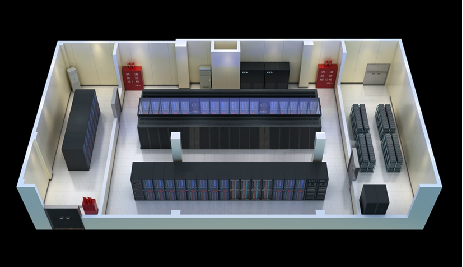
1. Intelligent inspection
According to preset parameters such as inspection content, time, cycle, and route, it independently starts and completes inspection tasks. During special inspections, operators can manually select inspection content and inspection routes and start inspections manually. It also supports real-time remote video inspection.
2. Intelligent obstacle avoidance
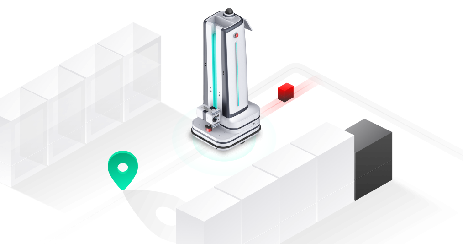
During normal inspection, when the intelligent inspection robot encounters obstacles or other objects that affect travel, it automatically avoids them and returns to the normal inspection route after avoiding the obstacles.
3. Automatic return-to-base charging
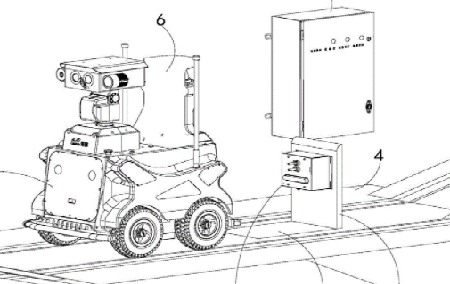
During inspection, when the battery reaches the set minimum level, the intelligent inspection robot can autonomously stop the ongoing inspection plan, switch to charging mode, and automatically run to the charging pile to charge. When the battery reaches the set maximum value, the robot automatically exits charging mode, switches to inspection mode, and automatically returns to the inspection route to continue inspection.
Robot Extended Functions
The extended functions of the Bee Inspection Robot can be configured according to actual application scenarios:
1. Intelligent 3D map construction
The robot can intelligently construct a 3D map of the equipment room.
It has highly intelligent and rapid mapping capability in unfamiliar environments and can quickly build a complete 3D laser point cloud map based on fast filtering, point cloud stitching, and registration technologies.
2. Intelligent visual recognition
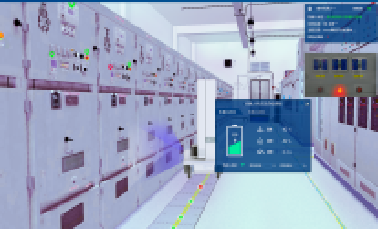
The high-definition visible-light camera carried by the intelligent inspection robot, combined with image recognition technology, automatically recognizes, uploads, and alarms data in the inspection area. Through technologies such as big data analysis and machine learning, it realizes intelligent early warning, rapid fault location, and root cause identification.
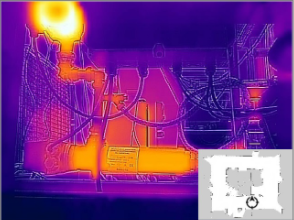
3. Intelligent instrument recognition
Based on deep learning algorithms, visual instrument recognition technology accurately identifies various equipment instruments in equipment rooms and power plants (conventional meters, special-shaped meters, digital display meters, disconnect switches, etc.), enabling efficient and accurate recognition and precision diagnosis of the operational health status of equipment room equipment.
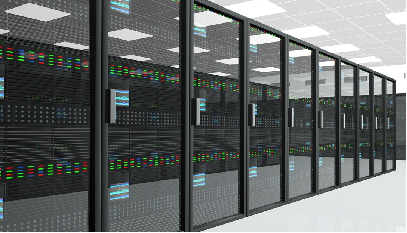
4. Video capture and storage
The high-definition camera carried by the intelligent inspection robot collects thermal images and high-definition images in real time and stores them on the backend storage server.
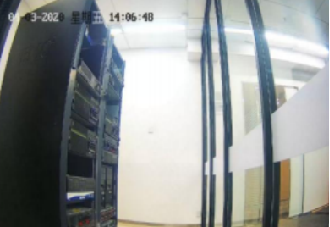
5. Remote command
It has remote intercom and command functions.
When a major accident occurs in the equipment room and people cannot arrive at the scene in time or cannot enter the scene, the intelligent inspection robot can be controlled to reach near the accident point. Through various sensors carried by the intelligent inspection robot, it provides a panoramic display of the accident scene and provides a decision-making basis for launching emergency plans.
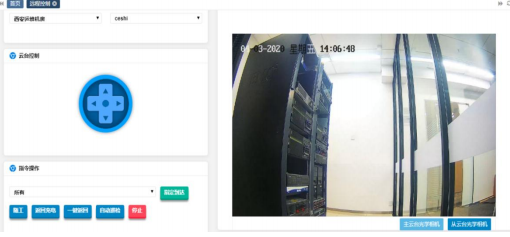
6. Intelligent alarms
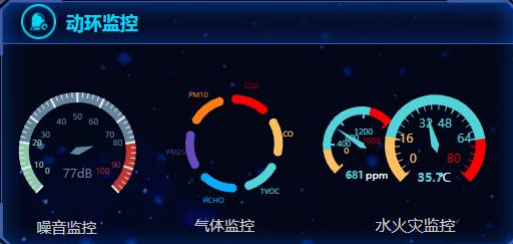
The intelligent inspection robot has functions such as equipment status abnormality alarms, abnormal sound alarms, abnormal temperature alarms, and fire alarms;
It can view alarm data in the management system in real time. The robot management platform can uniformly manage alarm information detected by indicator lights during inspection, as well as alarms when monitoring items such as sound, gas, fire, and flooding reach thresholds.
7. Precise status light recognition
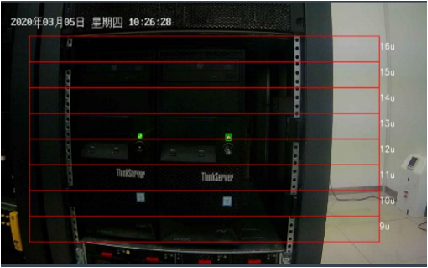
When equipment room equipment is not working normally, indicator lights will change or emit special alarm sounds. During inspection, the robot uses indicator light detection combined with indicator light image recognition technology to determine whether the equipment is working normally, which can shorten the time to discover equipment room equipment faults and improve fault handling efficiency.
The intelligent robot's precise status light recognition has a key equipment status recognition function. It detects equipment status lights, recognizes red, yellow, green, and blue light states, and can identify equipment locations. The camera PTZ can automatically rise and fall over a large range, with a lifting range of up to 0.6–2.0 meters, and can recognize equipment status lights at heights between 0.4 meters and 2 meters. It also takes into account coarse recognition of status light colors through closed cabinet doors when multi-hole cabinet doors are closed.
8. Thermal detection
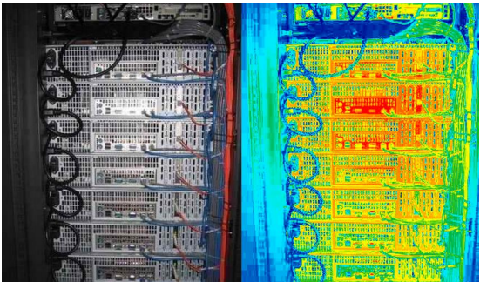
The thermal camera can detect equipment temperature status. The inspection robot uses the onboard thermal imaging camera to photograph monitored equipment at each inspection point, uses thermal imaging detection algorithms to generate a heat distribution map, and calculates the highest temperature point, lowest temperature point, and average temperature point on the heat distribution map.
The thermal imager can monitor and identify possible poor heat dissipation problems in equipment inside cabinets, and track and monitor development trends. If monitoring results exceed preset alarm values, warnings are issued in a timely manner, reminding maintenance personnel to inspect as soon as possible or strengthen monitoring.
9. Gas detection
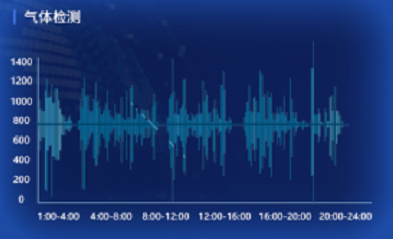
The onboard gas sensor is used to detect gas values at each inspection point in the equipment room and the gas content at each point, generating change curves to dynamically display change trends.
Specific gas probes can be optionally configured as needed to detect abnormal gas content and concentration released by cable aging, equipment overheating, etc., such as sulfur dioxide, TVOC, formaldehyde, hydrogen sulfide gas, etc., so that abnormal conditions can be detected as early as possible and preventive work can be done well.
Supported gas types include: CO, CO2, TVOC, sulfur dioxide, SF6, formaldehyde, hydrogen sulfide, etc.
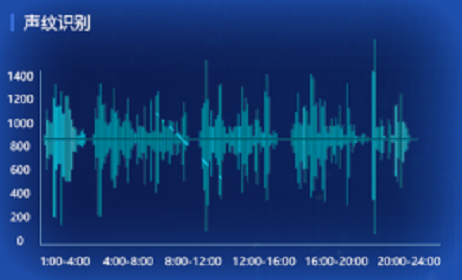
10. Voiceprint recognition
It has two functions: voiceprint recognition and noise recognition. It can recognize specific sounds and also recognize noise.
The inspection robot uses the onboard sound sensor to detect environmental noise at each inspection point in the equipment room, uses sound detection algorithms to calculate the environmental noise value at each inspection point, and records environmental background sound. For detection values exceeding the preset noise threshold, early warning information is provided in a timely manner.
11. Dust detection
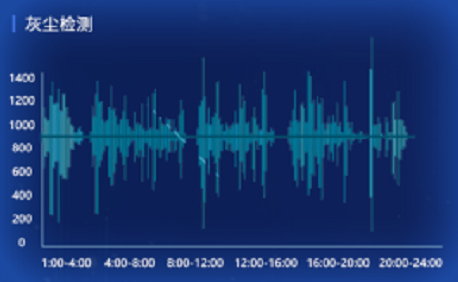
The robot can detect dust in the equipment room, including PM2.5 and PM10.
Unlike the power and environment monitoring system, the robot can patrol the equipment room in motion like a person, while the power and environment monitoring system can only collect data at a few fixed locations in the equipment room. Data collected by the robot system can more truly reflect the dynamic changes of the dust environment in the equipment room. In addition, the robot system can be equipped with more advanced monitoring equipment (such as high-resolution optical and infrared cameras) for real-time monitoring of PM2.5 and PM10.
12. Environmental detection
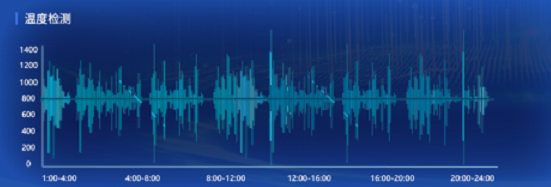
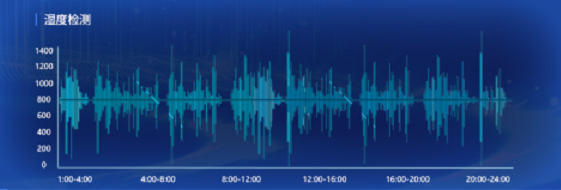
The robot can detect temperature and humidity in the equipment room.
After long-term high-load operation of equipment room equipment, temperature and humidity exceeding set thresholds can easily cause major losses. The equipment room inspection robot is equipped with temperature and humidity sensors and can detect temperature and humidity data at each monitoring point in real time, obtain changing values of the power and environment, perform comprehensive perception of temperature and humidity indicators, make precise decisions, and promptly launch corresponding plans to reduce the impact of accidents.
13. Water leakage detection
During the robot's movement, the leak detector issues alarms for water sources or other places with liquid along the route.
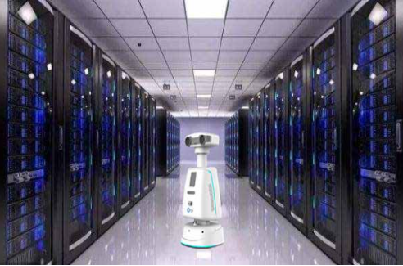
14. Fire detection
The high-definition video equipment carried by the intelligent inspection robot detects abnormal light sources and smoke inside power distribution rooms and switch rooms; infrared equipment identifies fire sources, detects open flames and abnormal internal temperatures of equipment in power distribution rooms and switch rooms, promptly identifies suspected fire locations, and uses the platform expert system to analyze whether there is a fire point and whether the fire protection system needs to be linked; after confirming the fire point, it sends a fire alarm to the local monitoring platform. At the same time, the inspection robot should drive away to a safe distance (the maximum temperature the robot can withstand) and observe from outside.
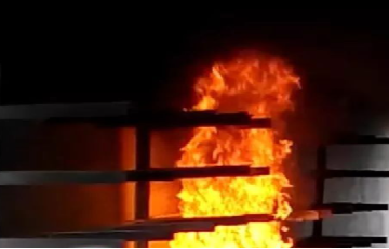
15. Geological settlement detection
The intelligent inspection robot adopts a method combining preset point calibration and video recognition to detect infrastructure deformation, geological changes, structural joint dislocation, etc. in equipment rooms, power distribution rooms, and switch rooms, effectively warning of possible serious geological hazards.
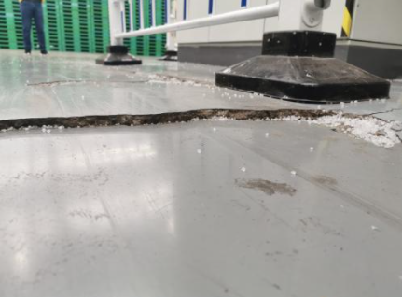
16. Equipment corrosion and deformation detection
Rust, corrosion, and deformation of equipment in equipment rooms, power distribution rooms, and switch rooms will lead to equipment failures over time. The intelligent inspection robot system uses image recognition and image comparison methods to precisely locate and photograph bushing equipment and fasteners. Combined with manual confirmation, it performs corrosion and deformation analysis and provides early warnings, preventing faults to a certain extent.
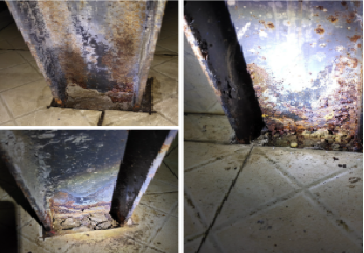
17. Face recognition
The robot has a face recognition function. When a person entering the equipment room is not registered, it prompts registration.
The equipment room does not allow intrusion by abnormal objects (such as unauthorized personnel). During standby or inspection, the robot uses the onboard high-resolution optical camera to monitor passages, and combined with face recognition technology, detects whether objects of interest appear and records video, providing effective evidence for equipment room security management.
When performing face recognition operations, the main process is: image acquisition, face detection, image quality assessment, feature extraction, and feature comparison. The details are as follows:
1. Image acquisition: Acquire single-frame or multi-frame image data for use by the face recognition system. This operation is performed by camera capture.
2. Face detection: Detect the position of faces in the image data collected by the camera. If there are multiple faces, the ROI range can be set freely.
3. Image quality assessment: Analyze the target face to derive parameters such as face tilt, rotation angle, facial occlusion ratio, and blur degree, and comprehensively determine whether the image is suitable for face feature extraction;
4. Feature extraction: Extract face features from the target face image for identity comparison. Usually, the image is passed through a neural network to extract feature values.
5. Feature comparison: Generally divided into two cases: 1:1 and 1:N. 1:1 determines whether the features of the target face and the features of a specified face belong to the same person. 1:N determines whether the target face features match one of N different faces in the face database. Feature comparison generally requires setting a threshold. If the similarity of two features exceeds the threshold, they are judged to be the same person; if below, they are not the same person.
18. Follow-work video recording
The robot can follow maintenance personnel and record and monitor related operations.
If maintenance personnel come to the equipment room for on-site maintenance work, the inspection robot can be remotely set to follow-work mode. The robot can identify the staff and remotely monitor and record video of the maintenance personnel's on-site maintenance work for later viewing or tracing.
19. Startup self-check
The robot can automatically perform a self-check when powered on.
It checks whether key components, network status, etc. are normal, and broadcasts the result by voice after the check is completed.
Robot Management Platform Functions
1. Console
The robot console provides a work platform for management personnel to manage quickly. It includes three parts:
(1) Real-time status
Displays the robot's working status in real time, can show the robot's movement route in the equipment room, and track the robot's real-time position. It also shows display information from the robot's two PTZ cameras, face recognition status, indicator light detection, power and environment detection, and other alarm information.
(2) Comprehensive control
Displays the robot's control information in real time, supports PTZ control, robot control, and camera control, and displays various professional detection information from robot inspection.
(3) Report management
Displays important report information in real time.
2. Robot management
The Bee Inspection Robot provides multi-level robot management. When the connection between the robot and the management system is interrupted, the robot can operate autonomously without affecting functions. Multi-level robot management supports viewing multi-robot operations and multi-robot working status.
(1) Equipment room inspection management
Robot inspection operation plans and operation contents can be customized, with multiple function options. For example: free combination algorithms such as status light detection, temperature detection, and face recognition.
(2) Inspection information
Daily equipment inspection improves equipment maintenance by ensuring inspection quality and improving inspection efficiency. Its purpose is to grasp equipment operating conditions and changes in the surrounding environment, discover facility defects and safety hazards, and take effective measures in a timely manner to ensure equipment safety and system stability.
(3) Curve chart statistics
The large amount of raw data and processed data generated by the robot every day can be uploaded in real time to the upper-level big data platform, and big data technology can be used for in-depth data mining, data asset management, and applications.
Historical curves display data detected historically by the robot and present them in ECharts chart form. Data can be displayed by day, week, month, or year.
3. Real-time monitoring
The system can remotely view the robot's real-time status, control it, and customize robot inspection operations.
The system displays the robot's working status in real time, can show the robot's movement route in the equipment room, and track the robot's real-time position. It also shows display information from the robot's two PTZ cameras, face recognition status, indicator light detection, power and environment detection, and other alarm information.
It displays the robot's control information in real time, supports PTZ control, robot control, and camera control, and displays various professional detection information from robot inspection. It can also customize robot inspection operation plans and operation contents.
4. Alarm management
Alarm management can display equipment alarm content, including status alarms, temperature alarms, and fire alarms.
Alarm notification methods: multiple notification methods such as sound, email, and SMS are provided.
The robot has indicator light, power and environment, face recognition, and instrument alarm functions, such as for uninterruptible power supplies, precision air conditioners for equipment rooms, and servers. When these devices are not working normally, indicator lights will change or emit special alarm sounds.
5. Inspection tasks
Set the robot's inspection route, inspection time, inspection items, and other information, and select modes such as scheduled tasks and periodic tasks; you can view all inspection records of the robot.
6. Voice broadcasting
The robot's voice broadcast content can be freely set. Broadcast modes are divided into fixed-point broadcasting and manual broadcasting.
Fixed-point broadcasting: The robot starts broadcasting voice when it runs to a specified position. The voice broadcast content can be freely configured.
Manual broadcasting: Manually control the playback and pause of the robot's voice. The voice broadcast content can be freely configured.
7. Personnel management
Uniformly manage basic information of company personnel, such as name, gender, ID number, contact phone number, emergency contact and phone number, department, and position.
8. Asset entry
Manage information such as the purchase time, commissioning time, and price of fixed assets; batch import via Excel is supported.
Application Scenarios
The Bee Inspection Robot can be deployed in equipment rooms, data centers, warehouses, factory workshops, supermarkets, parks, and other places for daily inspection work, achieving maximum safety protection with minimum investment.
Application Scenario 1: Equipment room inspection
The Bee Inspection Robot is mainly used in equipment rooms, information equipment rooms, power distribution rooms, main control rooms, high-voltage switchgear rooms, etc. in various fields. By receiving work instructions issued by the system, the robot executes corresponding work tasks and achieves all-round inspection coverage of all indoor equipment. On the one hand, it combines with the robot inspection system to achieve autonomous inspection while collecting information; on the other hand, it can serve as a supplement to fixed monitoring equipment, effectively expanding the monitoring range.
Application Scenario 2: Power inspection
The substation intelligent inspection robot can inspect the entire substation three times or more per day. Each robot turns its head more than 700 times per day, effectively reducing the work intensity of substation duty personnel. Through intelligent inspection by power robots, the automation process of substations is greatly advanced, enabling fully autonomous, high-efficiency, all-weather inspection with accurate inspection precision, high safety factors, and strong adaptability. The substation intelligent inspection robot has achieved remarkable results. Taking a 500 kV substation as an example, robot inspection frequency can be increased by 3 times, and manual routine inspection workload is reduced by 71.4%.
Application Scenario 3: Park inspection
Park inspection robots can freely switch between trackless navigation and track navigation, carry customized cameras, and perform inspections at fixed times, fixed points, and fixed paths. Visible-light video monitoring and data analysis can perform illegal parking detection and can replace manual abnormal monitoring such as fire conditions, intelligent recognition, garbage detection, and dial data collection, avoiding omissions in manual data collection that lead to analysis errors. When there is abnormal data, an emergency, or an abnormal security problem is found, the intelligent mobile robot can quickly transmit signals and issue alarms, take action to handle the problem in the shortest time, and ensure park safety.
Application Scenario 4: Indoor inspection
Scenario-based indoor inspection robots use onboard cameras, temperature and humidity sensors, and other equipment to monitor indoor equipment and the environment in real time. For floors with higher security levels, such as bank lobbies and schools, they can realize the function of accompanying maintenance personnel. This avoids waste of human resources during equipment maintenance and reduces error rates caused by human factors.
Application Scenario 5: Pavement inspection
The pavement inspection robot is an inspection robot specially developed for industries such as highway construction and maintenance and airport maintenance. It adopts the 'Robot+' concept design and integrates civil engineering 'inspection' technology. It is composed of an omnidirectional wheeled mobile platform, operating mechanism, inspection instruments, remote control system, and other components. It is equipped with domestically pioneered array ground-penetrating radar, impact echo, cameras, and other inspection instruments to perform full-coverage automated inspection of surface and internal defects of airport pavements, bridge decks, (express) highways, and other roads. Through intelligent data analysis and information management software, it automatically generates inspection reports, forms big data on the health status of the target pavement, and provides users with predictive maintenance plans.
Customization Services
We provide customized inspection robot services with high performance and full-scenario adaptability. Aiming at the complex needs of energy, power, security, warehousing, industrial manufacturing, healthcare, elderly care, and other fields, we design one-stop intelligent inspection solutions for you.
Deep scenario adaptation
We focus on providing customized inspection robot services with **high performance and full-scenario adaptability**. Aiming at the complex needs of energy, power, security, warehousing, industrial manufacturing, and other fields, we design one-stop intelligent inspection solutions for you.
AI-driven efficient operation and maintenance
Integrating AI algorithms, it supports equipment defect recognition, abnormal alarms, and automatic data analysis, greatly reducing labor costs and improving inspection accuracy and efficiency.
Flexible modular design
It provides optional functional modules (robotic arm, 5G transmission, autonomous charging, etc.) and supports later upgrades and expansions to meet future requirement iterations.
Full-process service support
From requirements analysis and solution design to deployment, commissioning, and operation and maintenance training, we provide technical support throughout the entire process to ensure seamless implementation.
FAQ
Q1: Where is the Bee Inspection Robot mainly used?
A: It is mainly used in IDC equipment rooms, power distribution rooms, and switch rooms, and can also be used in factory workshops and indoor parks. It can perform 7×24-hour automatic inspection, replacing manual work to monitor equipment and equipment room environments.
Q2: Does the Bee Inspection Robot require laying tracks or markers for navigation?
A: It uses SLAM trackless natural navigation and does not require modification of the on-site environment. It can build maps and avoid obstacles autonomously, detour around obstacles, and automatically return to the charging pile to charge when the battery is low.
Q3: What equipment abnormalities can the Bee Inspection Robot recognize?
A: It can recognize meter readings and cabinet indicator lights, and use thermal imaging to detect equipment temperature rise. It can also monitor gas, noise, and water leakage. When an abnormality occurs, it triggers an alarm, making it convenient for operation and maintenance personnel to handle it promptly.
Q4: What materials does the robot output after inspection is completed?
A: The system automatically generates daily inspection reports, monthly reports, hazard statistics tables, and trend analysis reports. The reports can be exported and viewed, making it convenient for operation and maintenance personnel to review equipment status and manage equipment room assets.
Q5: Through what methods can the Bee Inspection Robot's alarms notify personnel?
A: When temperature exceeding limits, equipment failures, fire conditions, or personnel abnormalities are detected, the platform will pop up reminders. It also supports sound, email, and SMS alarm push notifications, and retains on-site pictures and video records.