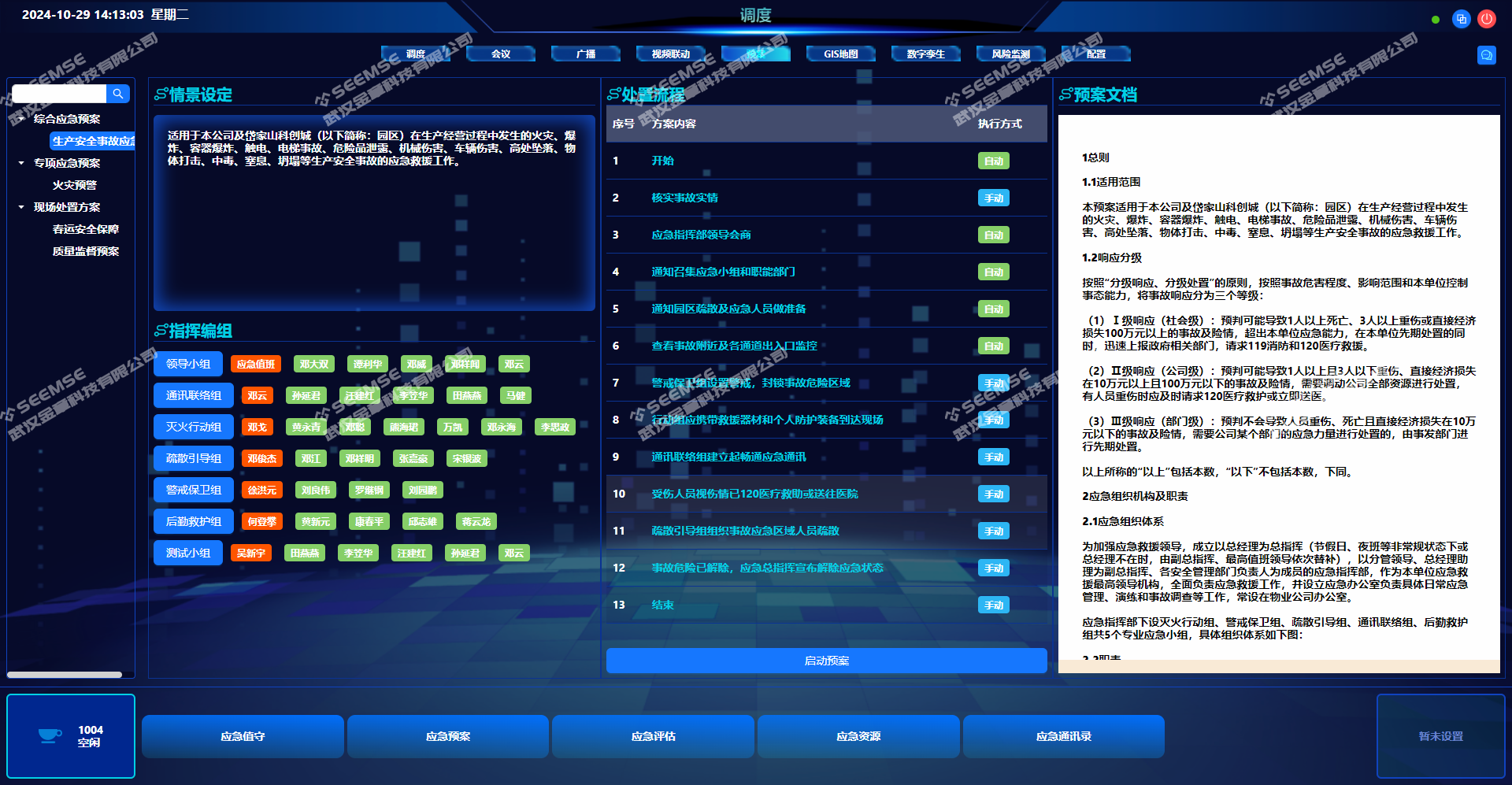
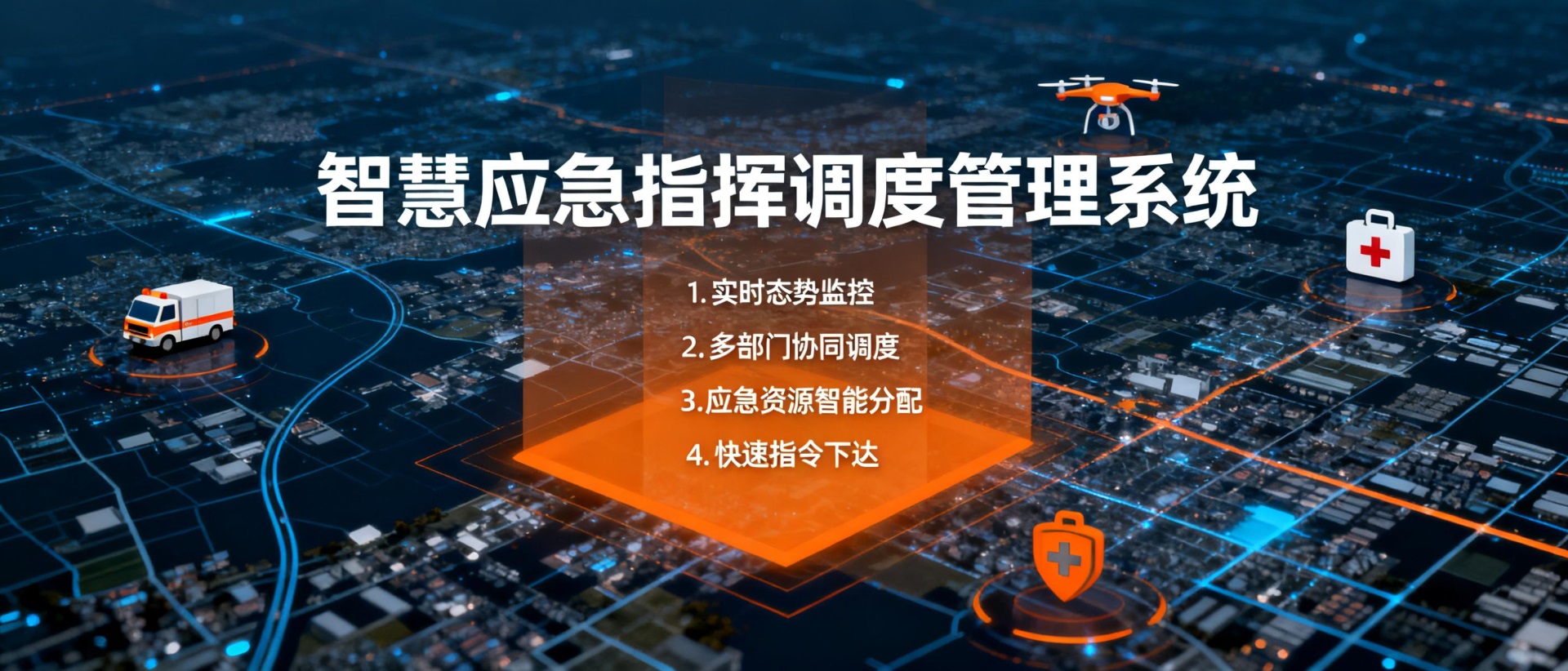
The Ant Smart Emergency Command and Dispatch Management System covers two major parts: emergency management and emergency command and dispatch. The two can either depend on each other or exist independently. In actual projects, they are integrated to varying degrees according to requirements. In this product introduction, they are divided into two major parts for clear explanation.
(1) Smart Emergency Management System
It integrates six core functions: daily duty, resource management, early warning response, emergency plan management, training and drills, and professional knowledge base, achieving full-process coverage of emergency management.
Smart Emergency Data Dashboard
Statistical analysis of emergency equipment, emergency equipment data collection, safety accident analysis, hidden danger inspection and governance status, major hidden danger analysis, site alarm statistics, etc.

Emergency Management
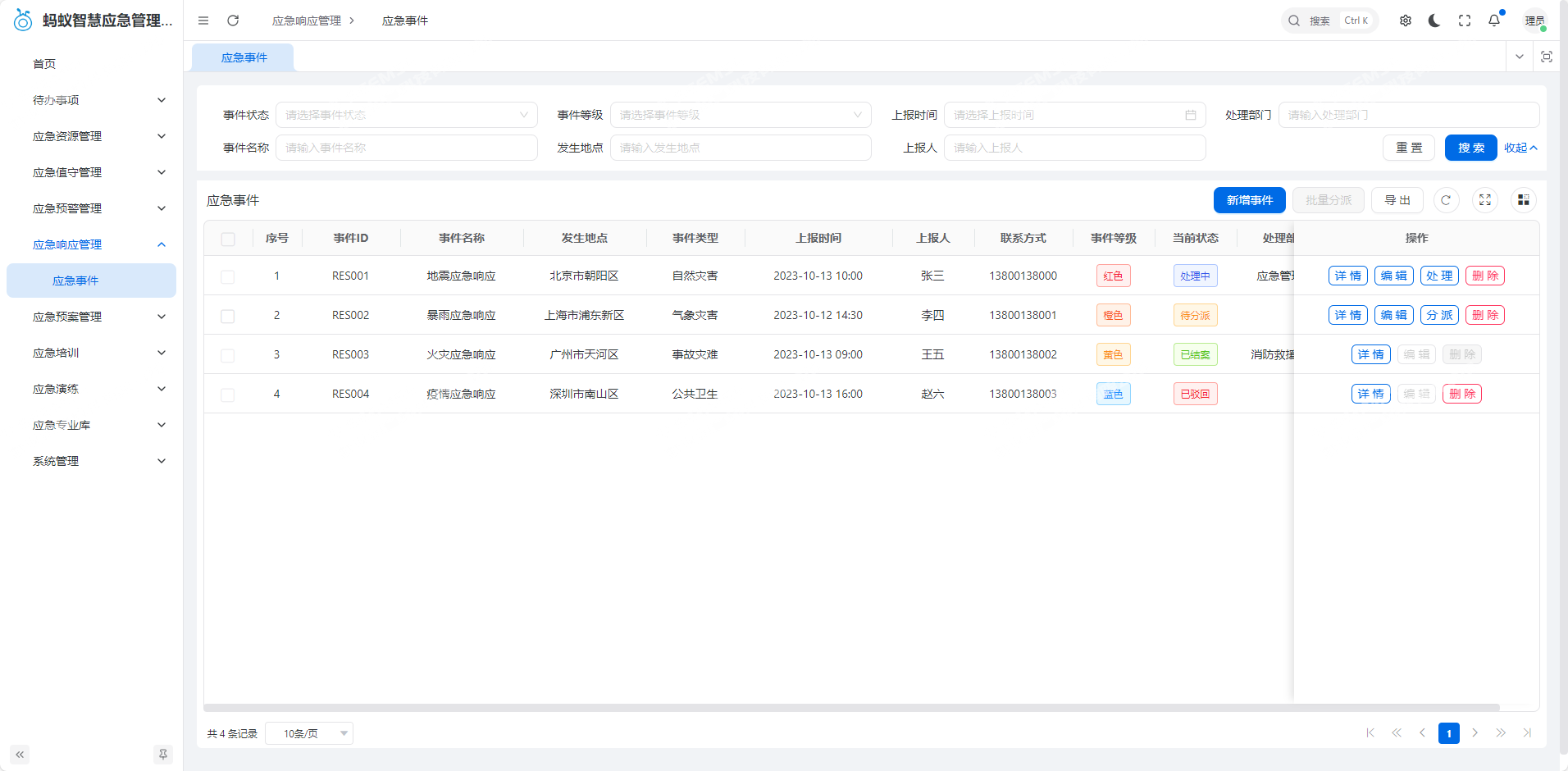
Emergency incident management: generates emergency incidents based on reports from duty personnel or emergency equipment. It allows viewing of emergency incident type, occurrence time, occurrence address, reporter, incident status, etc., and can process emergency incidents.
Equipment alarm records: records equipment name, equipment type, alarm time, processing status, and other information. Alarm information can be converted into emergency incidents (start emergency response).
Emergency response management: oriented by accident rescue, it manages accident rescue feedback information and tracks accident response dynamics, including initial response status, resource demand status, resource arrival status, resource consumption status, on-site feedback status, on-site environment status, etc. It continuously associates accident-related knowledge and models, updates accident response plans, and comprehensively forms a thematic accident situation display.
On-site feedback tracking: emergency management personnel can track real-time information on on-site rescue and response online.
Risk Governance
Risk point management: according to their own actual conditions, enterprises identify detailed information such as risk locations, hazard factors, and accident-prone types, and form an enterprise risk list. Based on risk identification or evaluation results, control measures are formulated from engineering technology, administrative management, education and training, personal protection, and emergency response, and a risk hierarchical control list is prepared to implement hierarchical control.
Risk inspection checklist management: for risks that have been classified and their control measures, according to the risk control responsibility levels, risk and hidden danger inspection checklists are set for personnel at each level. Personnel at all levels conduct regular inspections of risks and hidden dangers according to the contents of the checklists. The checklists can be dynamically set according to different enterprises, different positions, and different inspection contents.
Regular risk inspection service: personnel at all levels of the enterprise regularly inspect control measures for risks and hidden dangers according to the inspection frequency requirements in their own risk and hidden danger checklists. Inspection results are divided into controlled/uncontrolled. When the inspection result is 'uncontrolled', the reason for being uncontrolled must be entered and hidden danger information must be registered.
Temporary risk inspection service: for special inspections, temporary inspections, and other requirements of enterprises, inspectors can customize one-time inspection checklists according to the contents of the enterprise risk list and register inspection results according to the checklists.
Risk level management: safety risk levels are divided from high to low into major risk, relatively major risk, general risk, and low risk, which can be represented by red, orange, yellow, and blue respectively.
Emergency Plan Management
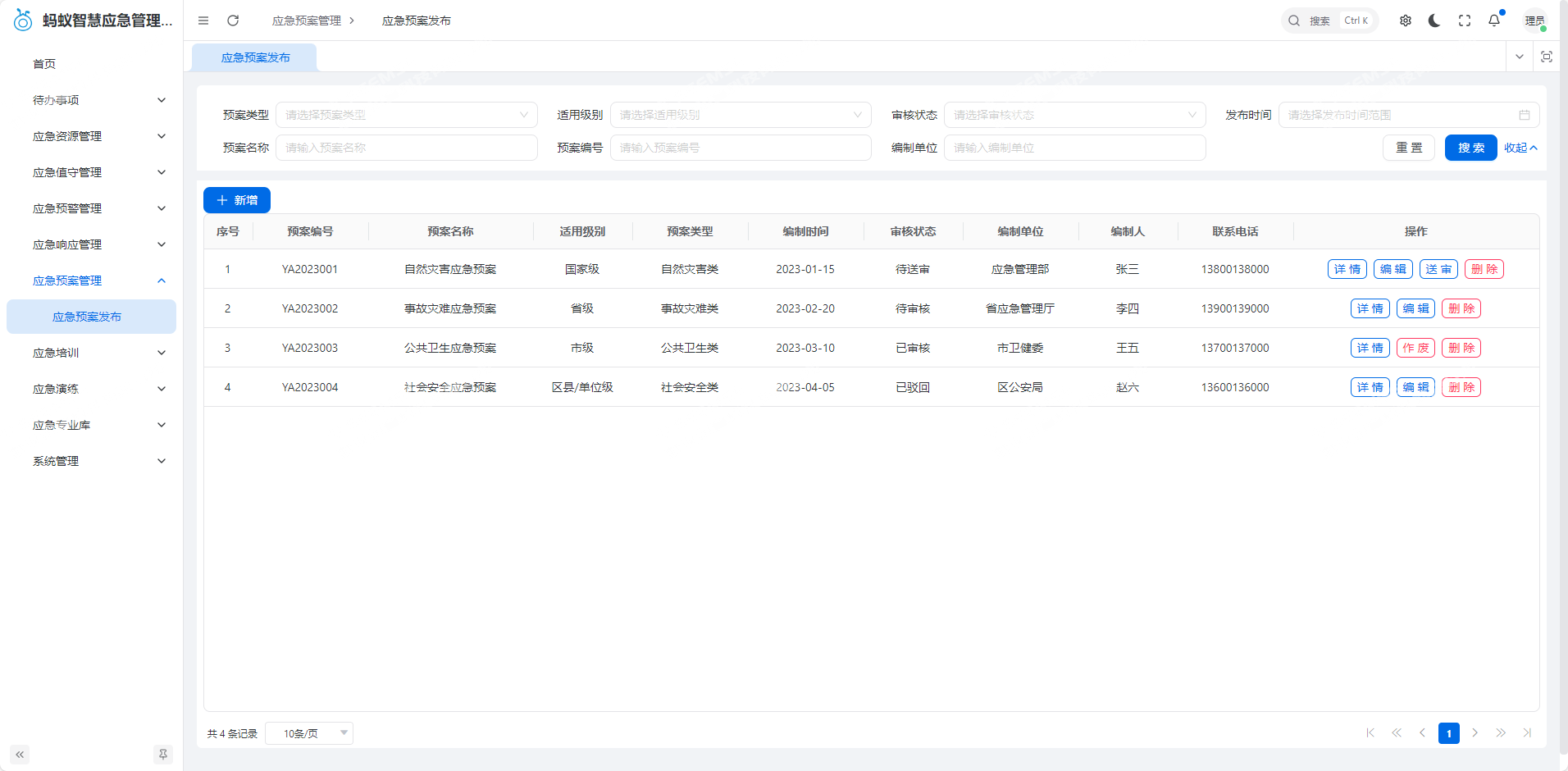
Emergency plan release: provides management of structured emergency plans, including basic plan information, emergency processes, plan materials, personnel, experts, evacuation information, etc.
Emergency plan evaluation: analyzes and evaluates information related to emergency plan events, including event nature, time, location, impact scope, etc., to guide emergency decision-making.
Emergency Resource Management
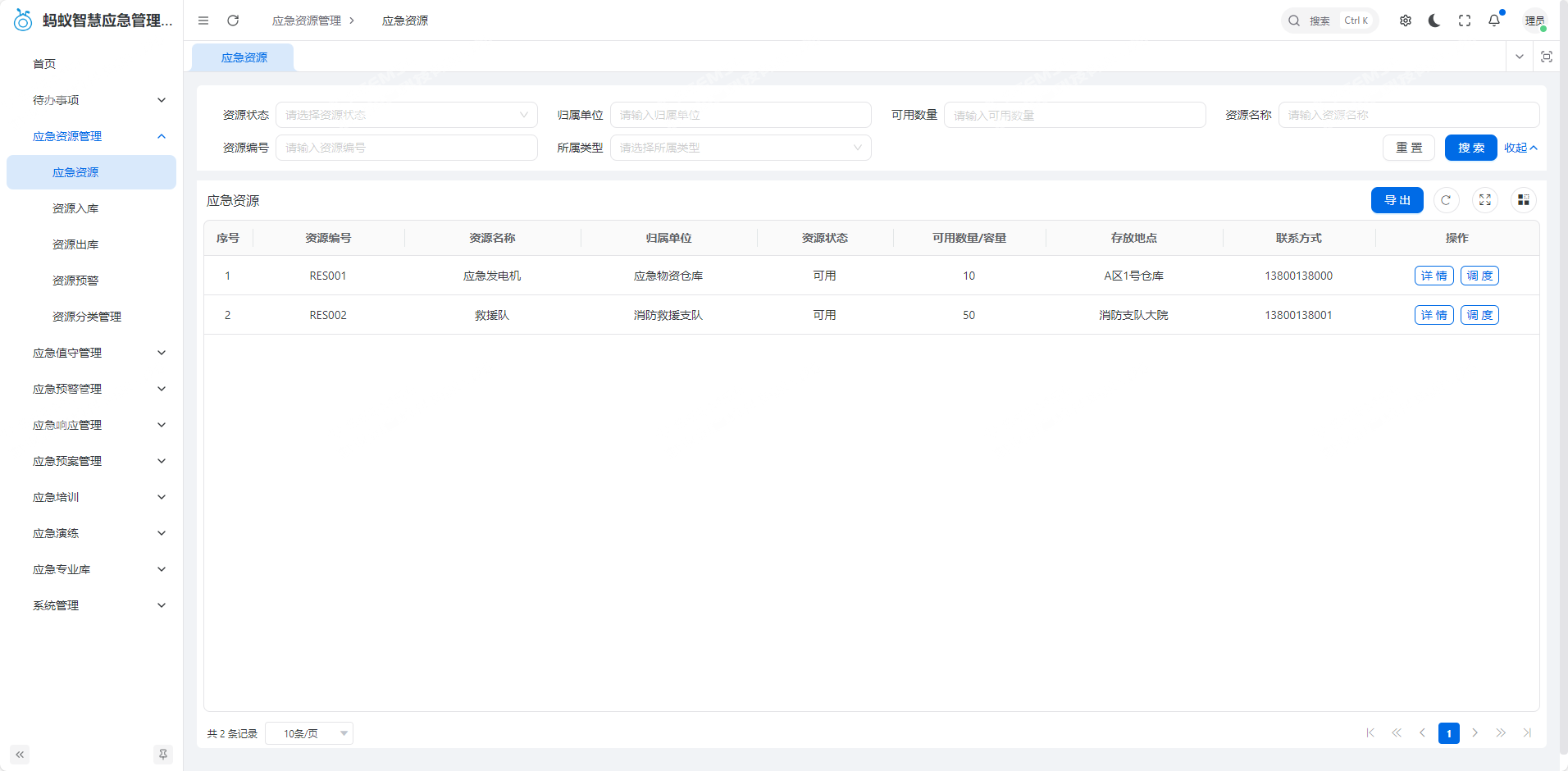
Emergency material management: establishes an emergency material warehouse to realize statistics and management of emergency material information, including basic information, types, quantities, usage methods, storage locations, current status (idle, in use, etc.) of emergency resources.
Emergency expert management: manages information related to experts around the enterprise, including expert name, title, field of expertise, expert level, contact information, etc. Users can add/delete/modify/query information through the system.
Emergency vehicle management: manages basic information of emergency vehicles, including vehicle status, vehicle location, etc.
Emergency Duty Management
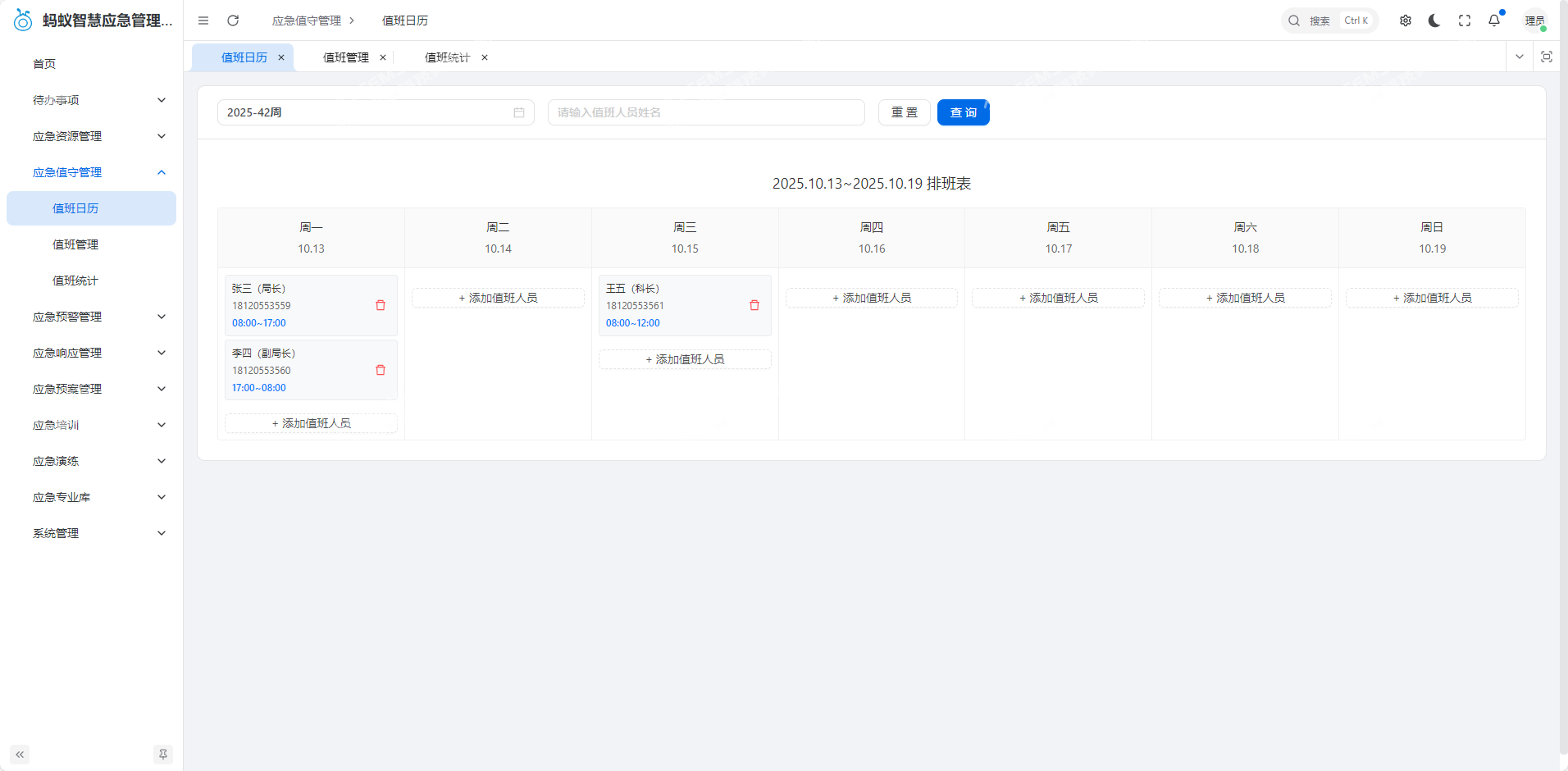
Duty calendar: displays scheduled and unscheduled situations in calendar form, providing an overview of all duty arrangements of the enterprise. Ordinary users can only view their own duty arrangements.
Duty scheduling: manages emergency duty information by day, including duty date, leading leader, emergency duty telephone (24 hours), production duty leader, duty personnel, duty experts, etc. It provides an overview of enterprise duty scheduling. Administrators can add/delete/modify/query information through the system.
Emergency reporting: duty personnel can report emergency incidents based on on-site conditions found during inspections. After reporting, the corresponding management personnel can process the reported incident information.
Emergency Equipment Management
Manages basic information of emergency equipment and supports add/delete/modify/query operations on basic equipment information.
Emergency Aftermath Management
Aftermath work: records aftermath response work after an emergency incident ends, including pollutant treatment, loss statistics, assessment analysis, summary reports, accident investigation, continuous monitoring, etc.
Reconstruction planning: records and tracks reconstruction planning schemes and related work after environmental pollution accidents. Basic reconstruction scheme information entry includes reconstruction scheme name, category, preparation date, basic description, etc.
Emergency archiving: management personnel upload and submit completed materials for archiving as required. The system can automatically generate process record files based on emergency process information, facilitating subsequent review, query, and analysis.
Emergency Training Management
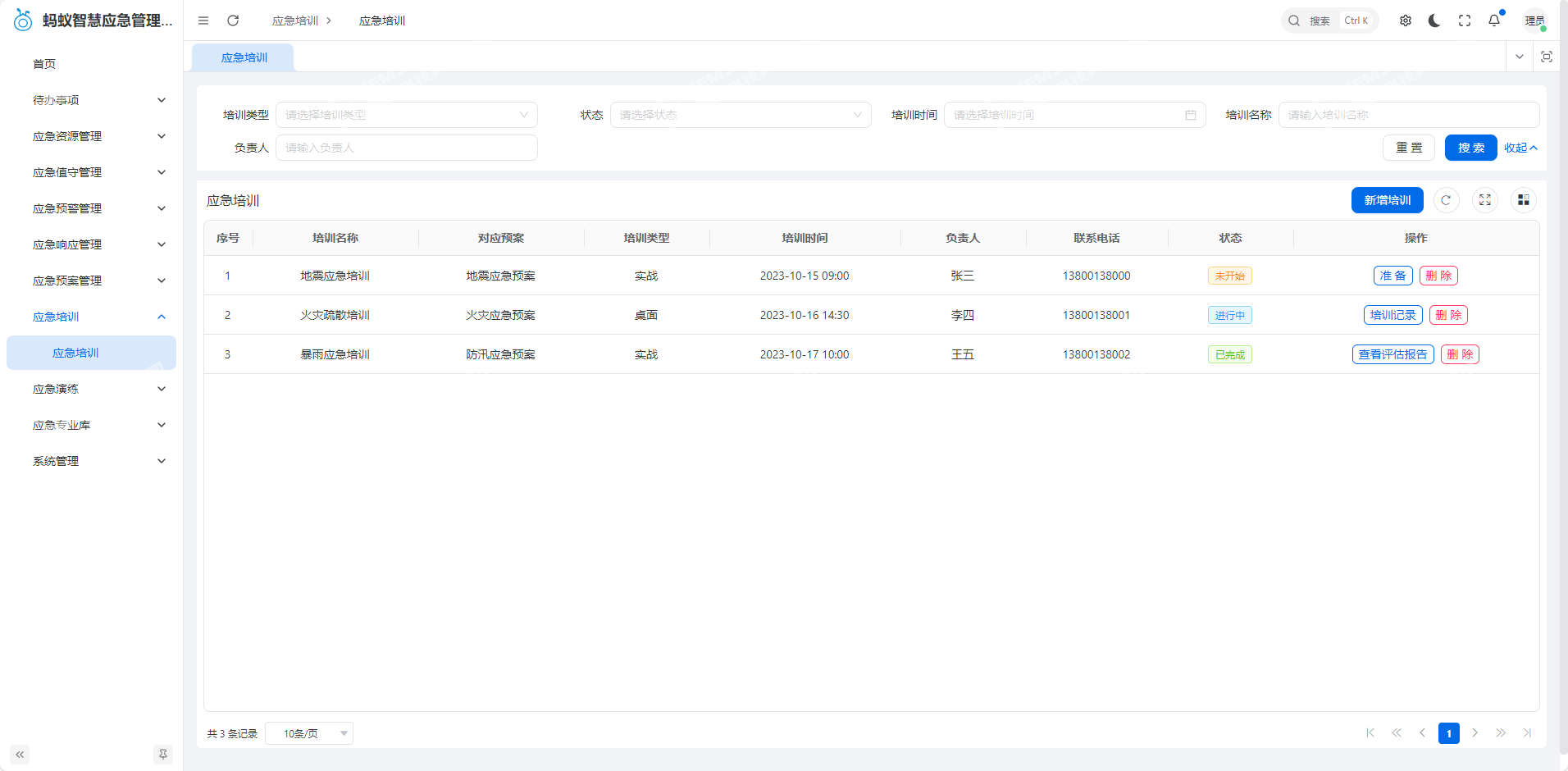
Emergency training plan: regularly organizes each unit to conduct plan training according to the training plan, and evaluates the suitability of plans based on training feedback information.
Emergency training records: records information such as training time, training plan, and training participants for each training session.
Case Library
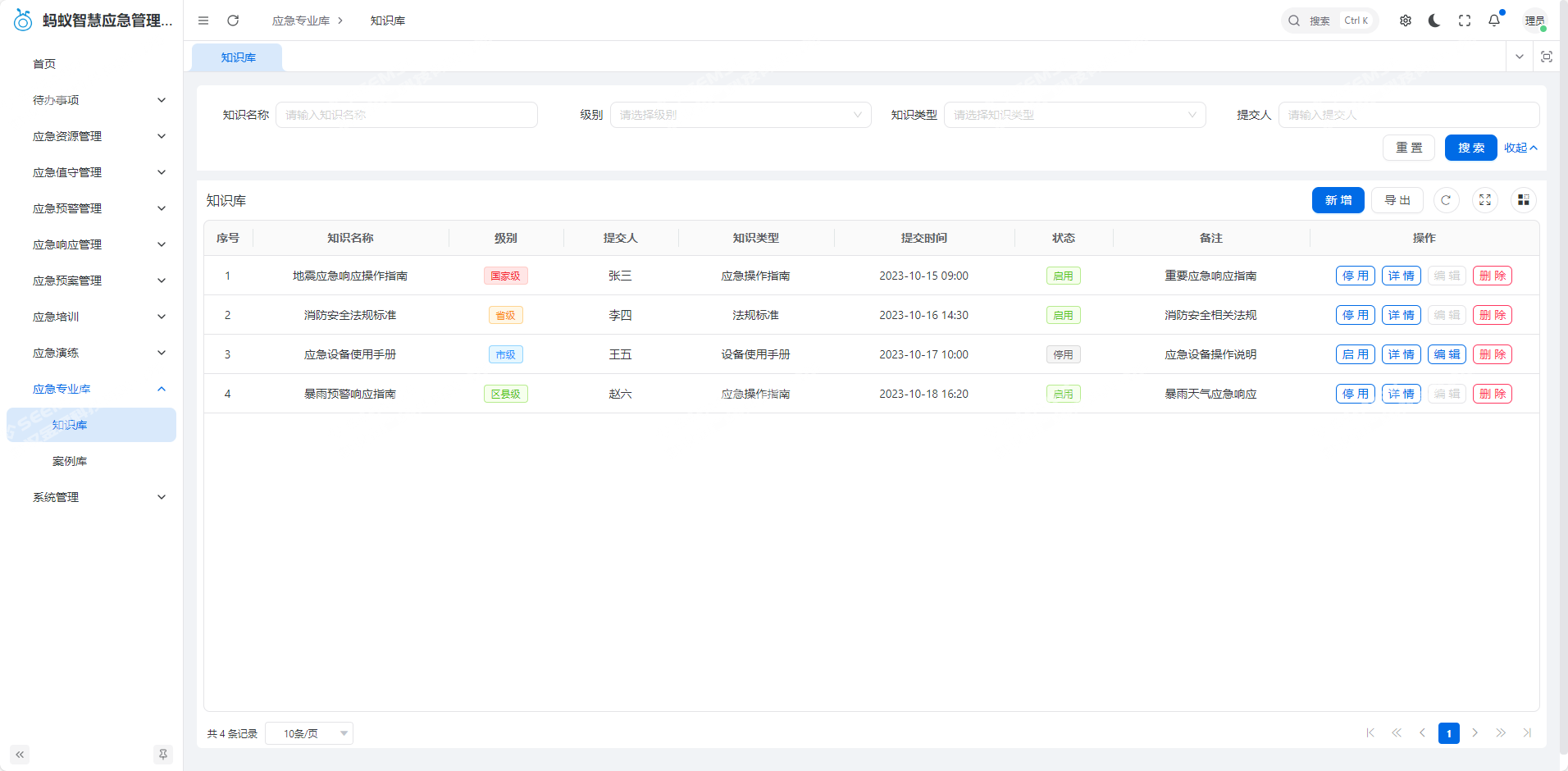
Collects, organizes, and archives various major emergency incidents, establishes a complete case library, and lists event causes, response processes, experience summaries, and reflections on shortcomings, providing reference and lessons for emergency management.
(2) Converged Communication Dispatch and Command System
Relying on core converged communication technologies and intelligent digital emergency plan command capabilities, the Converged Communication Dispatch and Command System enables cross-departmental and multi-terminal integrated command and scientific management.
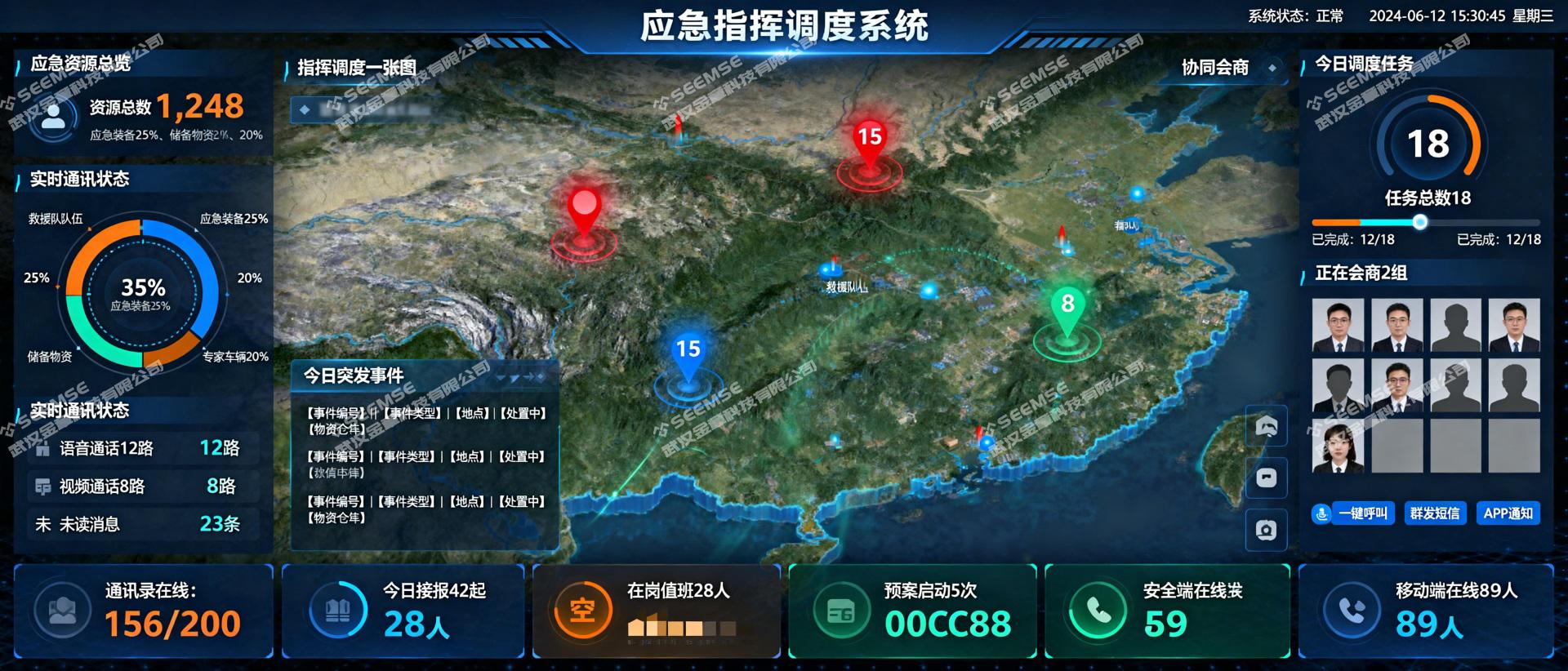
Emergency Dispatch and Command Dashboard
The emergency dashboard comprehensively displays and visualizes dispatch content.
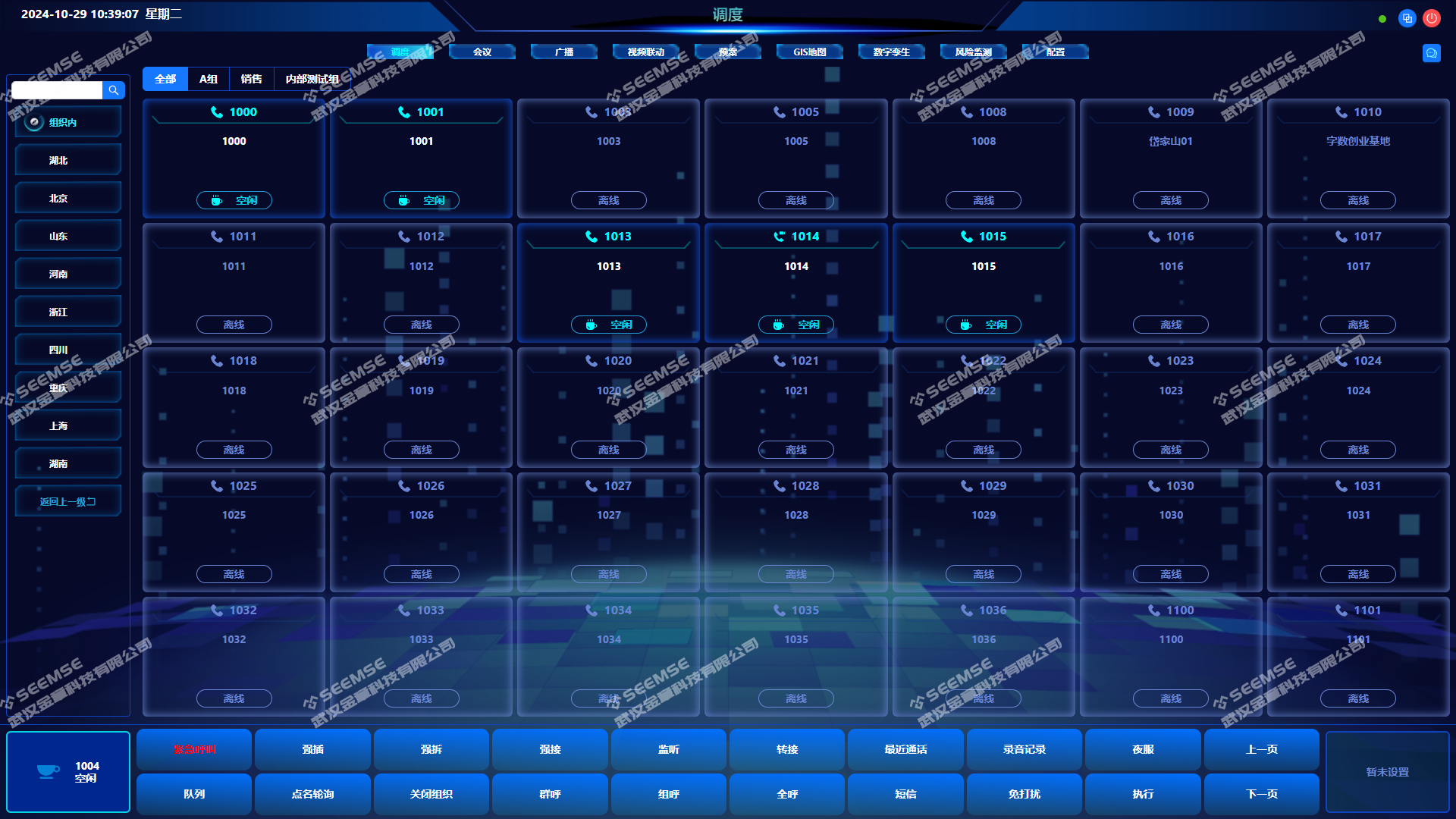
Dispatch Console
Device viewing: view devices by group/organization, display device status, and support pagination.
Call operations: single call, mass call, group call, all call, emergency call (can forcibly disconnect the target call).
Call management: view recent calls, queue answering, call transfer, and support forced release/forced insert/forced answer/call monitoring.
Other functions: queue group answer, night service switching, send SMS, initiate polling roll call, view recordings.
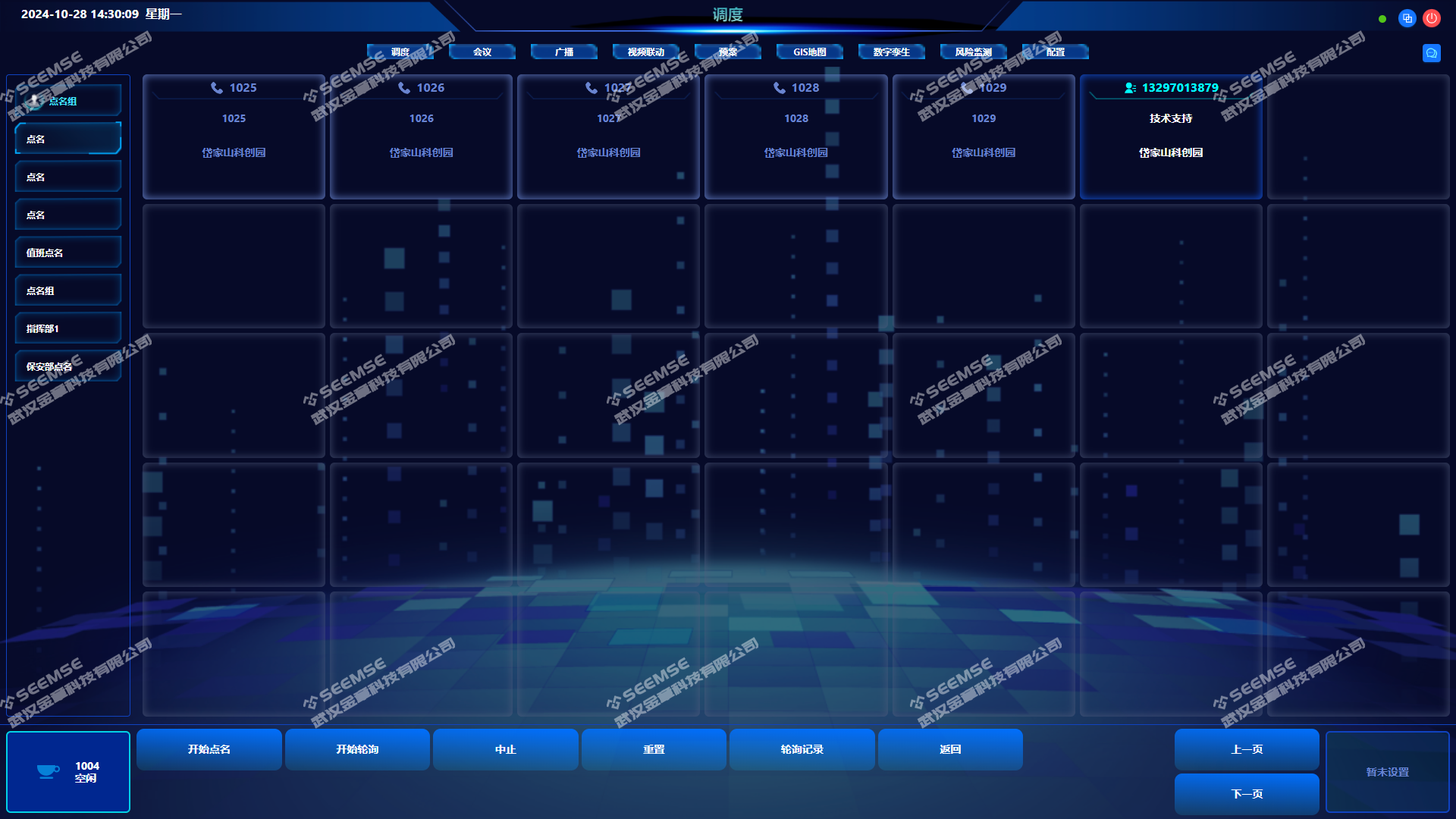
Polling Roll Call
Select a roll call group and support starting roll call (batch calling) and starting polling (calling one by one).
Supports pause/resume/abort/reset operations and viewing historical roll call/polling records.
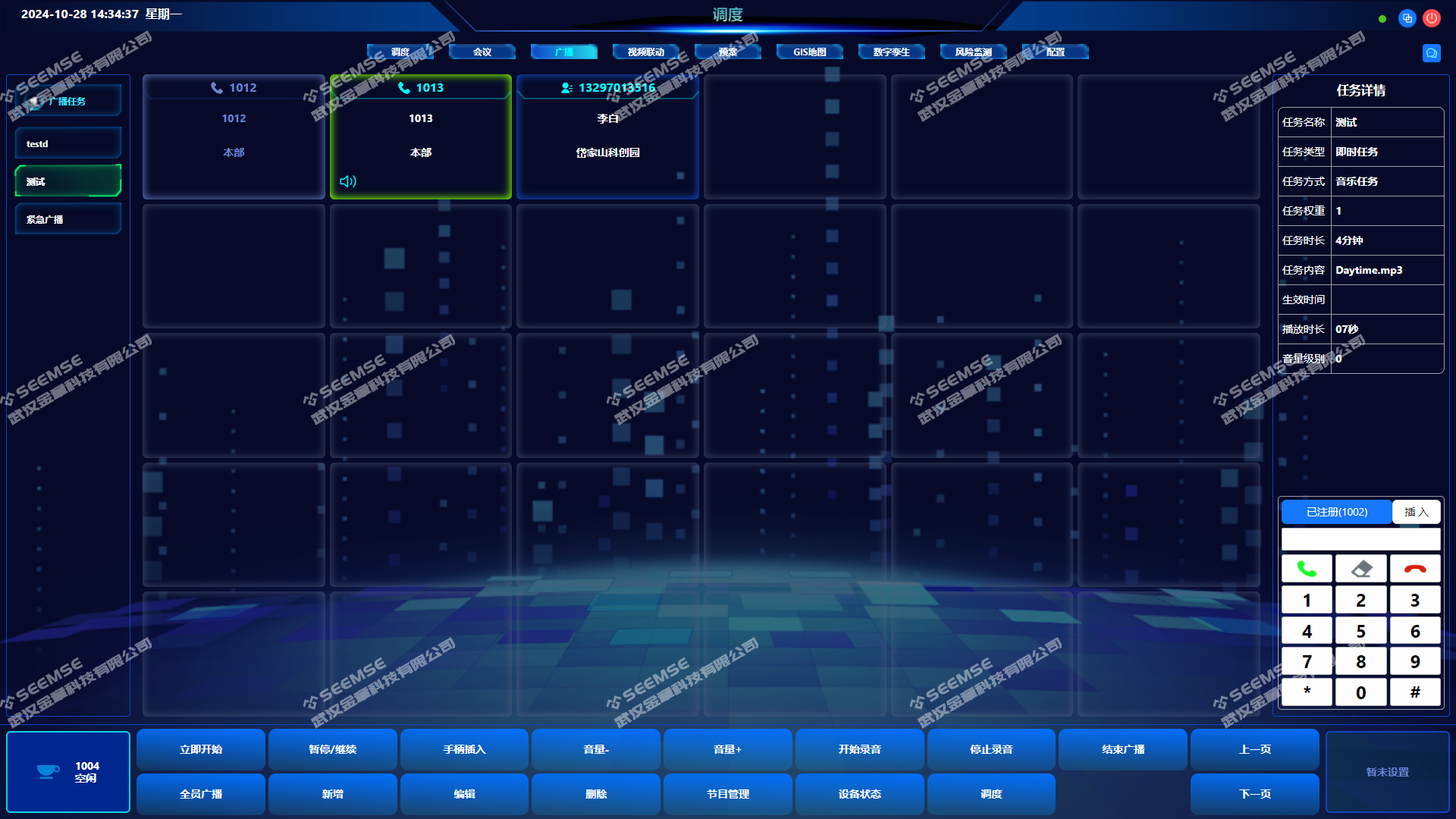
Broadcasting
Add/edit/delete broadcast tasks, supporting three modes: text, music, and live capture broadcast.
Supports starting/ending broadcasts, inviting members, and initiating all-member broadcasts (forcibly pausing the current task).
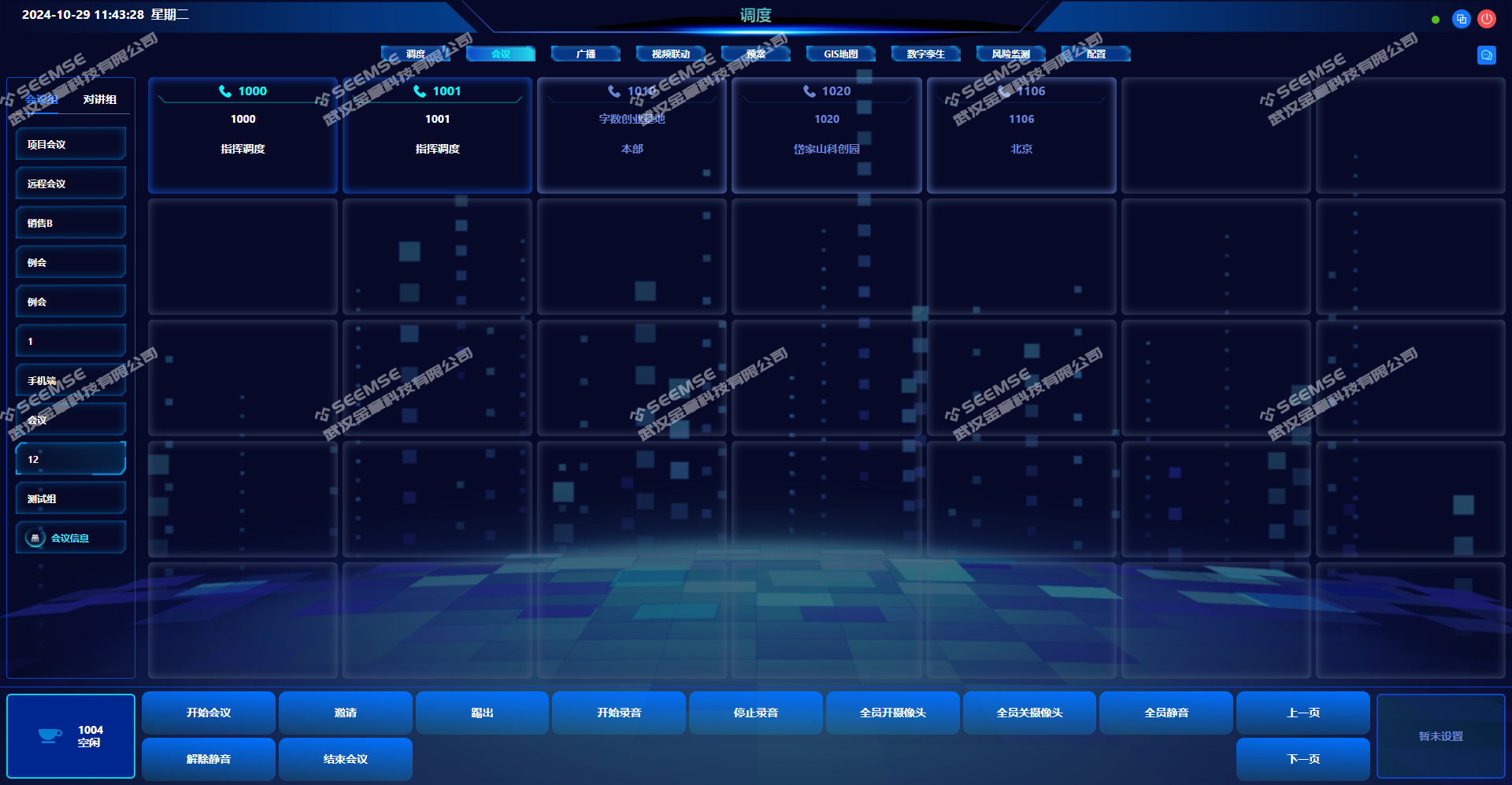
Conference
Start a conference and call members; supports dispatcher mute, inviting/removing members.
Manage member cameras (turn on individually/turn off all) and mute (mute individually/mute all); supports conference recording and ending conferences, and real-time intercom using intercom groups.
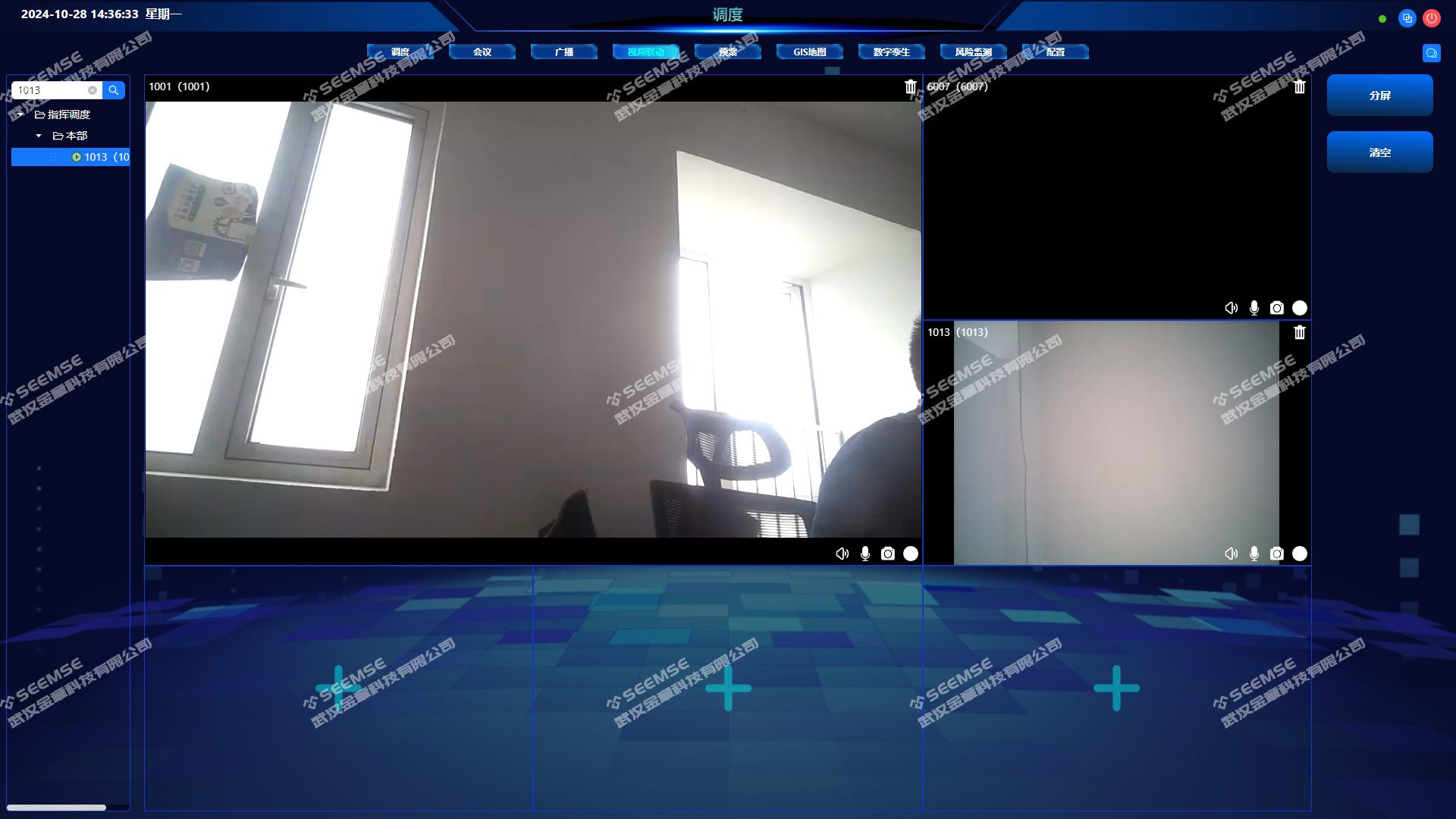
Video Linkage
Add devices to display video; supports split-screen switching (1/4/9/16 split screens), PTZ control, full-screen operation, and closing video/clearing split screens.
GIS Map
Select map devices for operations such as calls and SMS; supports adding resources to the map and editing/deleting them.

Emergency Plan
View plan details (scenarios, processes, etc.) and start plans (automatically execute processes such as SMS/broadcasting).
After plan execution, emergency assessment can be performed (summary, record query), and the emergency resource table and contact list can be viewed.