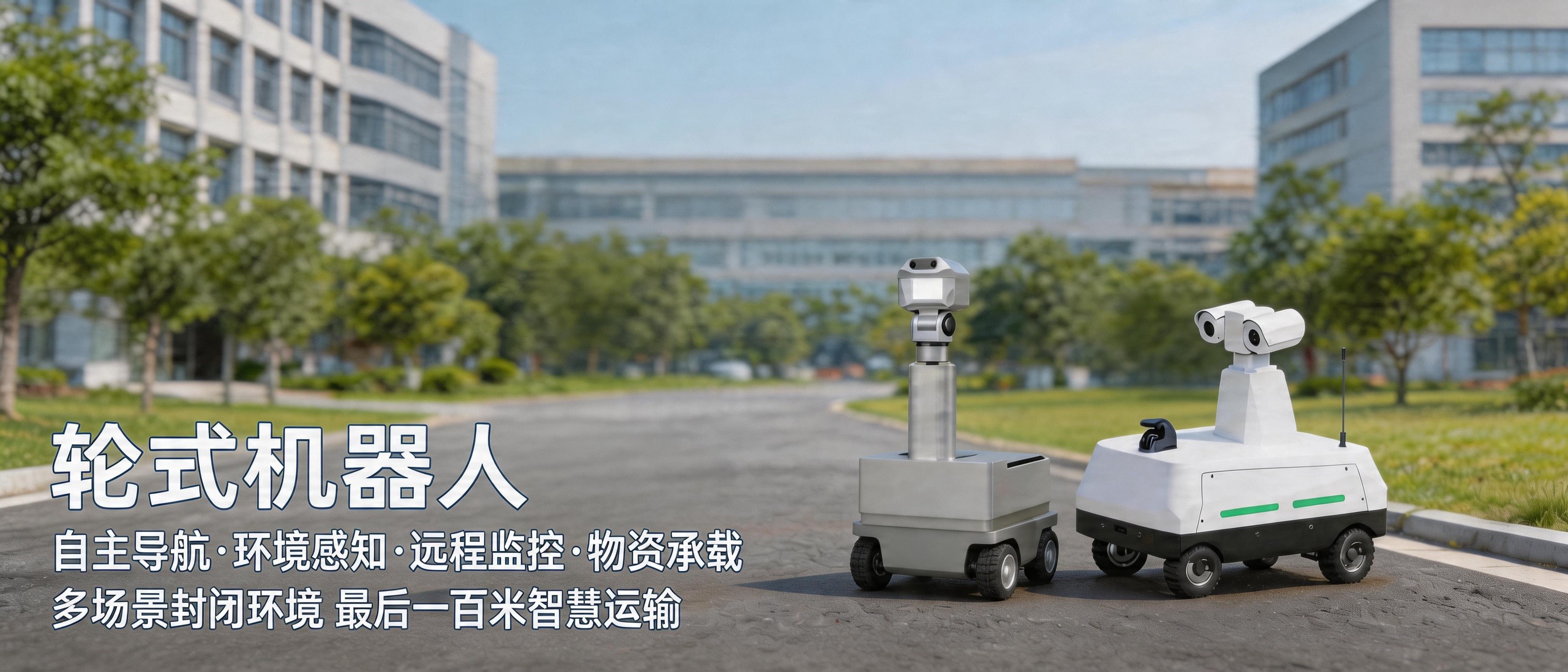
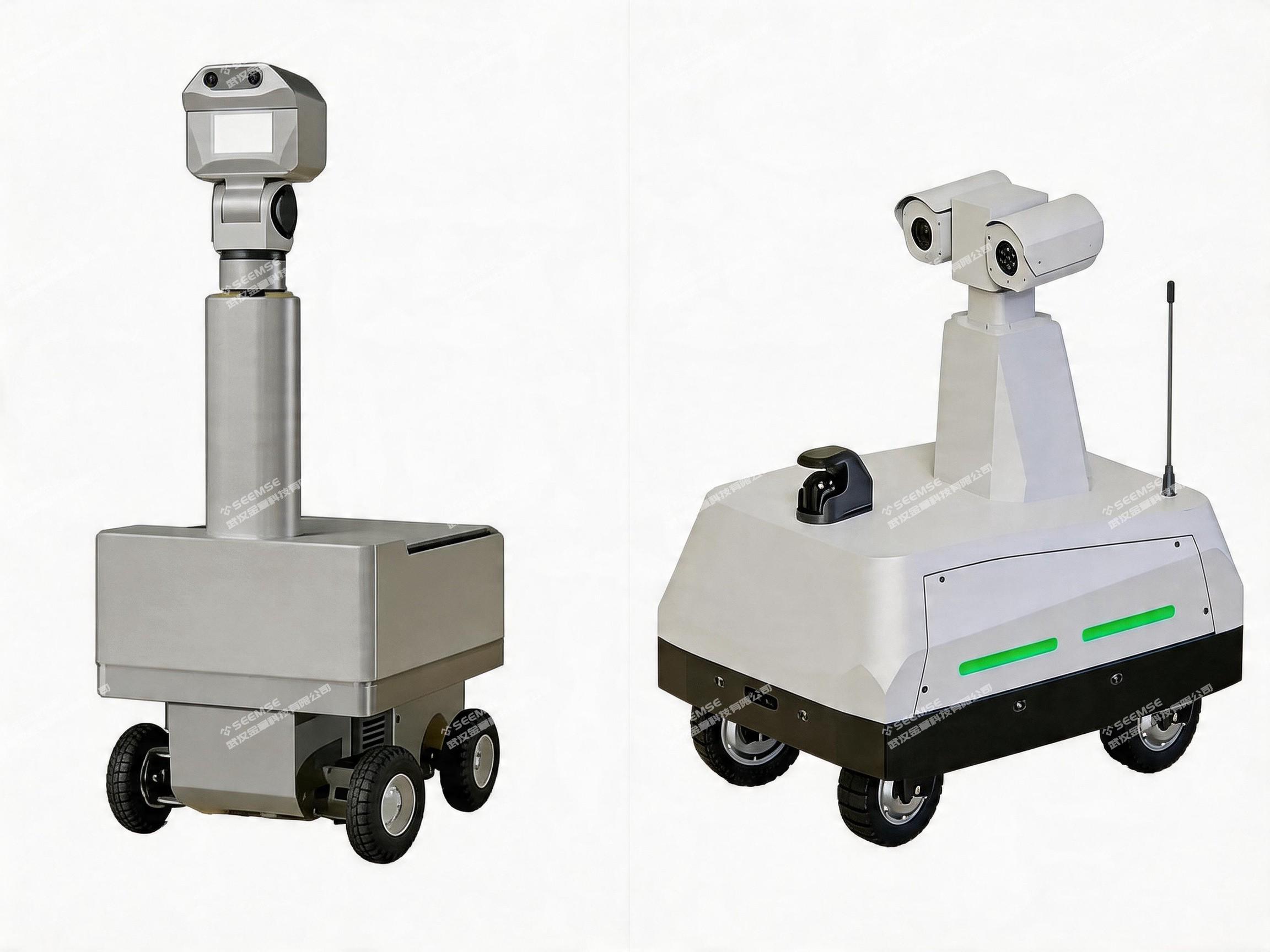
The application scenarios of the wheeled robot are divided into three major categories:
- Category 1: Process transport — As part of production and service chains, it completes scheduled and on-demand transfer of materials, parts, medicines, samples, etc. between internal nodes.
- Category 2: Last-mile delivery — Completes the 'last 100 meters' of service processes, delivering items from distribution points to end users, or collecting items from users back to service nodes.
- Category 3: Auxiliary applications — Including environmental inspection, security patrols, and light manipulation tasks after adding a robotic arm, expanding the robot's functional boundaries.
Part 1: Process Transport
Parts Delivery in Manufacturing Workshops
In manufacturing workshops such as automotive parts, electronics, and machining, workstations on production lines need regular replenishment of parts and fixtures, while empty material boxes need to be recovered. The robot loads materials from a central warehouse or line-side warehouse and autonomously transports them along workshop aisles to designated workstations. After arrival, personnel pick up and confirm the goods, or a robotic arm automatically places the materials onto workstation racks. Workstations can call for materials at any time via call buttons, and the system automatically dispatches the nearest idle robot to respond. By integrating with the MES system, the robot can obtain the material consumption rate of each workstation in real time and automatically trigger replenishment tasks when materials are about to run out, achieving JIT delivery.
Recommended configuration: Omnidirectional wheel chassis + multi-layer material rack + industrial camera + MES integration
Tool/Cutting Tool Circulation Delivery
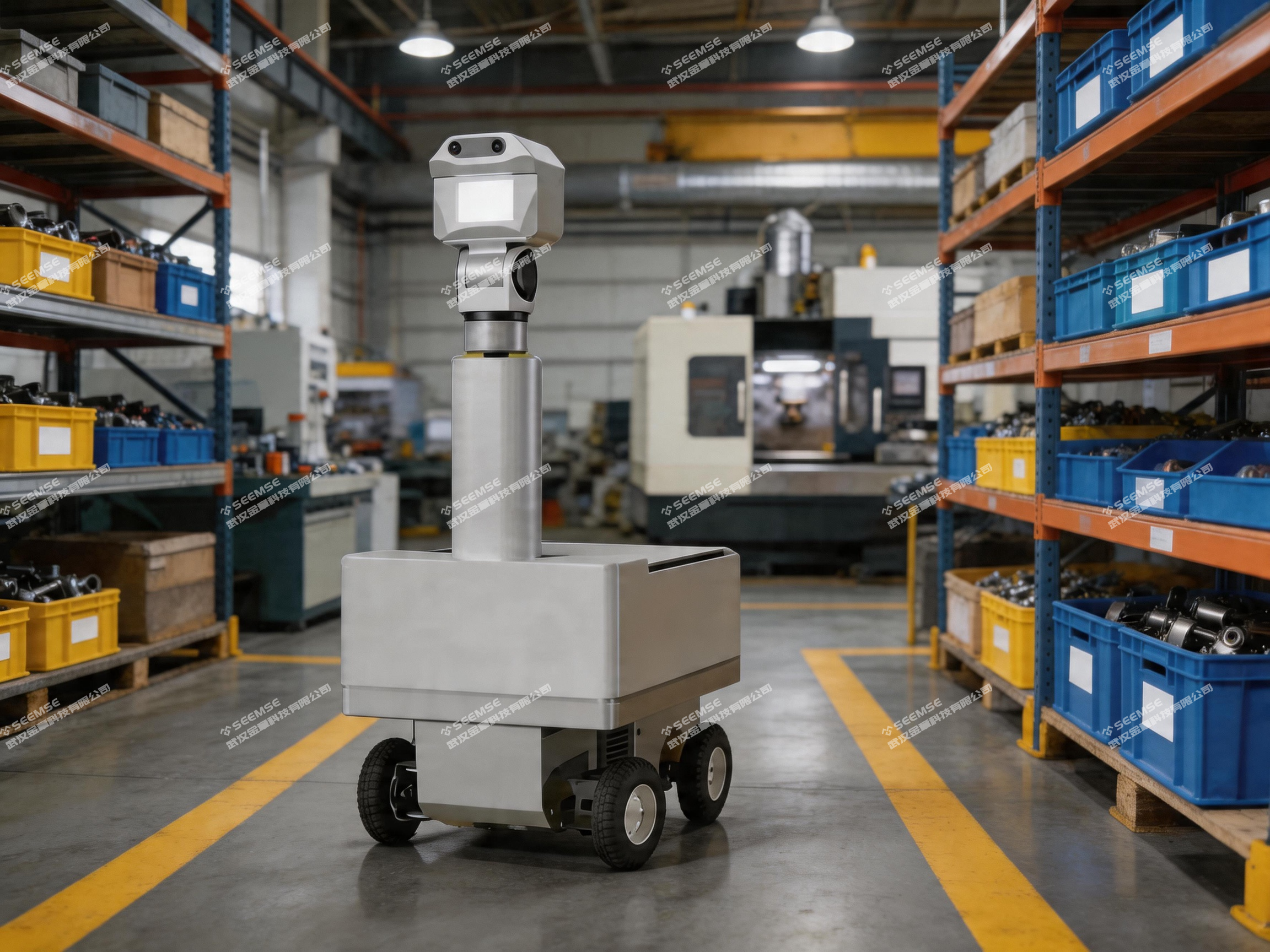
In machining workshops, maintenance workshops, and mold workshops, cutting tools, measuring tools, and fixtures are numerous and frequently borrowed and returned. The robot acts as a 'mobile tool library', circulating between the tool room and each workstation. Operators submit tool requests through workstation terminals; the system notifies the warehouse to prepare materials; the robot collects tools from the warehouse and delivers them to the workstation; operators swipe their work cards to verify identity before taking them. Returns are likewise sent back by the robot. The built-in RFID reader/writer can automatically identify information on the loaded tools and record the borrower, checkout time, and return time, forming complete tool life-cycle traceability.
Recommended configuration: Omnidirectional wheel chassis + lockable drawer-type material cabinet + RFID reader/writer + identity recognition module
Hospital Medicine/Sample Intra-hospital Circulation
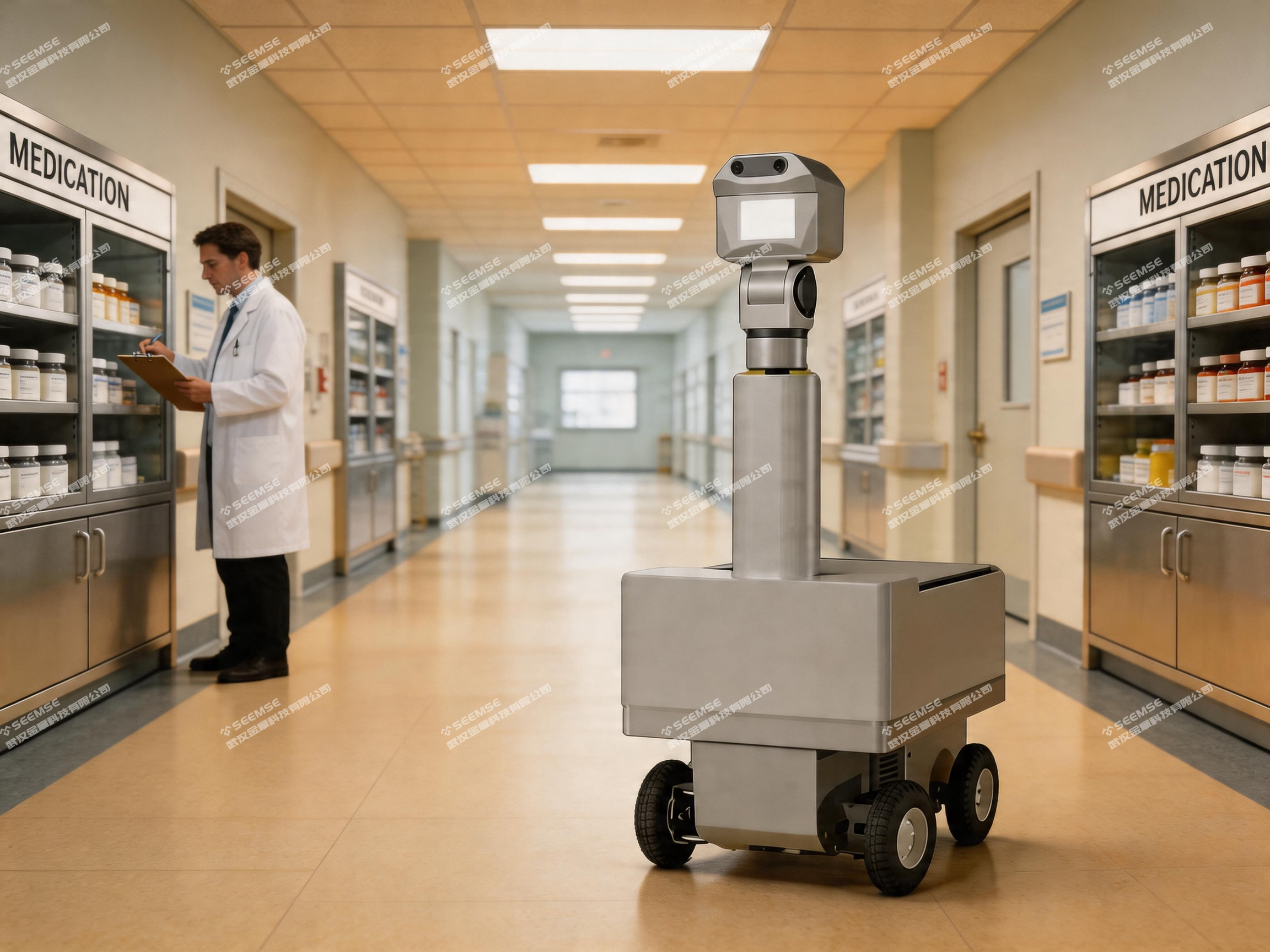
In large general hospitals, pharmacies, clinical laboratories, central sterile supply departments, inpatient wards, and operating rooms are distributed across different buildings or floors. The robot handles medicine delivery from pharmacy to wards, sample transport from laboratories to wards, and instrument delivery from the central sterile supply department to operating rooms. A lockable enclosed cargo box is configured to ensure safety, and authorized personnel open it with work cards. The robot supports linkage with ward access control and elevators to achieve cross-floor autonomous transport. Nurses' stations can place orders directly through the HIS system, and the robot automatically delivers medicines from the pharmacy to the designated ward after picking them up. For medicines requiring temperature control, a constant-temperature cargo box can be configured to record temperature data in real time.
Recommended configuration: Differential chassis + lockable enclosed constant-temperature cargo box + elevator linkage + HIS integration
Laboratory Sample/Reagent Transfer
In biopharmaceutical R&D laboratories and medical testing laboratories, samples and reagents need frequent transfer between different laboratory areas (e.g., receiving area → extraction area → amplification area → detection area). The robot is equipped with a constant-temperature enclosed cargo box and autonomously transports between laboratories, supporting linkage with access control. The entire transport process is recorded, and the backend can trace the transport path, time, and temperature data of each sample, meeting GLP regulatory requirements. After integration with the LIMS system, the robot can automatically trigger sample transfer according to experimental progress, achieving a partially automated closed loop in laboratory workflows.
Recommended configuration: Differential chassis + constant-temperature enclosed cargo box + temperature/humidity sensor + LIMS integration
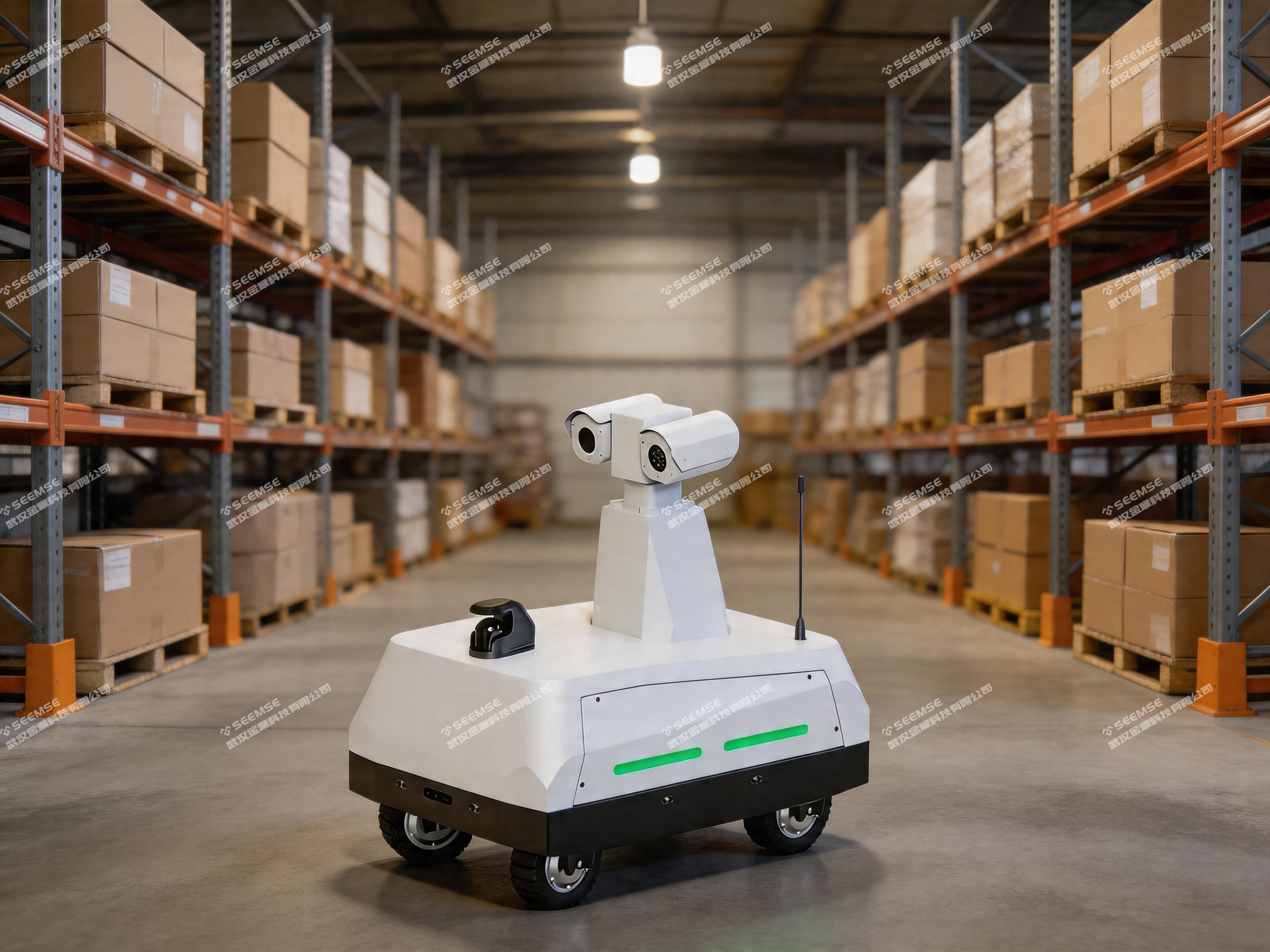
In-warehouse Replenishment and Transfer
In large e-commerce warehousing centers or logistics distribution centers, goods pass through multiple functional areas from inbound to outbound. The robot handles replenishment from storage areas to picking areas and material box transfers between different functional areas. It can tow multiple material carts to complete batch transfer at once. Integrated with the WMS system, it obtains inventory levels in each area in real time and automatically triggers replenishment tasks when picking area inventory falls below the threshold. In the 'goods-to-person' picking mode, the robot directly transports cargo boxes from the storage area to picking workstations, greatly improving picking efficiency.
Recommended configuration: Omnidirectional wheel chassis + towing module or multi-layer material rack + RFID reader/writer + WMS integration
Raw Material Supply for Food Processing Lines
In food and beverage production lines, raw materials and packaging materials need to be regularly replenished to filling and packaging workstations. The robot transports raw materials from temporary storage areas to production lines and recovers empty pallets/boxes on the return trip. The body uses a stainless steel shell and easy-to-clean design, meeting food-grade hygiene requirements. Linked with the production line PLC, it automatically triggers replenishment according to the line takt, avoiding downtime caused by material shortages.
Recommended configuration: Omnidirectional wheel chassis + food-grade tray + PLC linkage + scheduled task scheduling
Cross-area Transfer of Semiconductor Wafer Cassettes
In semiconductor cleanrooms, wafer cassettes need to circulate between different process areas (e.g., lithography → etching → deposition → inspection). The robot transports wafer cassettes, meets Class 100 cleanliness requirements, and uses anti-static enclosed cargo boxes. Integrated with the MES system, it automatically executes cross-area transport according to production instructions and tracks the position and status of wafer cassettes throughout the process, reducing contamination risks caused by manual intervention.
Recommended configuration: Omnidirectional wheel chassis + anti-static enclosed cargo box + cleanroom compatibility + MES integration
Paper Roll/Ink Cartridge Delivery in Printing Workshops
In printing and packaging workshops, consumables such as paper rolls, ink buckets, and printing plates are heavy and bulky. The robot transports consumables from the warehouse to printing machines while recovering empty roll cores and waste. Optional heavy-duty load versions or towing modules can transport multiple paper rolls at once. Integrated with the production scheduling system, it automatically prepares and delivers corresponding consumables according to orders, reducing machine waiting time.
Recommended configuration: Omnidirectional wheel chassis + towing module + production scheduling integration
Material Circulation in 3D Printing Farms
In 3D printing service factories, dozens of printers run simultaneously. The robot is responsible for delivering filament/resin to be printed to each printer and recovering finished products and waste after printing. With a robotic arm installed, automatic loading and unloading can be achieved—the robotic arm installs filament spools onto printers and removes finished products into collection boxes, forming a material closed loop. During unattended night shifts, the robot can work continuously, improving equipment utilization.
Recommended configuration: Omnidirectional wheel chassis + multi-layer material rack + robotic arm (automatic loading/unloading)
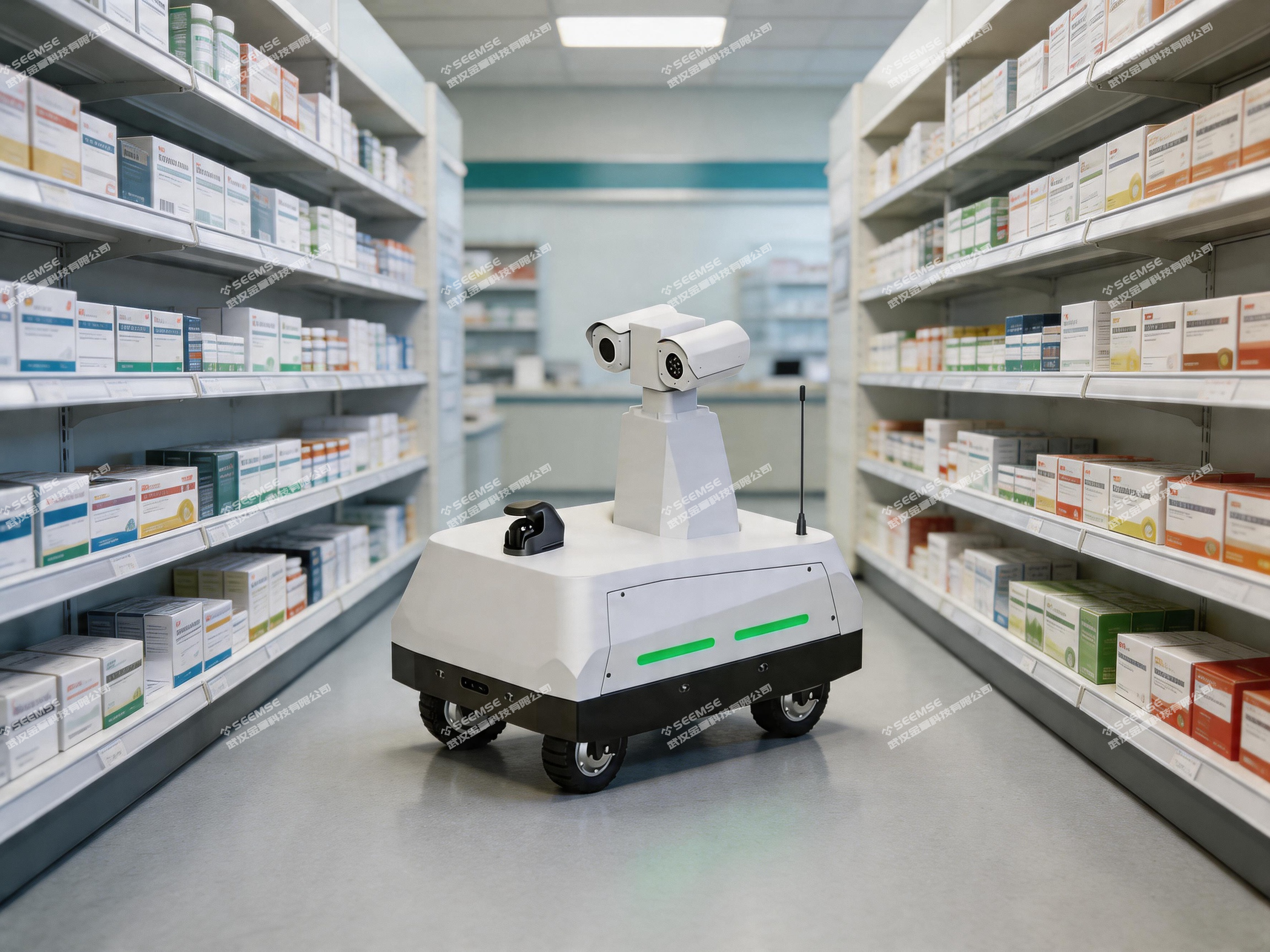
Automated Pharmacy Replenishment
In hospital pharmacies or large retail pharmacies, medicines need to be replenished from the warehouse to the dispensing window shelves. The robot transports medicines from the warehouse to the dispensing area and links with automatic dispensing machines to automate logistics within the pharmacy. Pharmacists can complete replenishment without leaving the window, focusing on prescription review and medication guidance. Batch replenishment is automatically executed at night to ensure shelves are fully stocked when the clinic opens the next day.
Recommended configuration: Differential chassis + tray + pharmacy management system integration
Part 2: Last-Mile Delivery
Park Express Delivery to Buildings
In large enclosed parks such as university campuses, science parks, and software parks, courier companies deliver packages centrally to express stations every day, and then manual staff distribute them to each building. The robot is deployed at the distribution point; staff sort packages by building and put them into the robot's cargo box; the robot autonomously navigates to the first-floor lobby or parcel locker of the target building. Recipients receive notifications through a mobile APP and scan codes on the robot screen to pick up items. The robot delivers to multiple buildings in one trip, stopping sequentially along the route. In the future, it can be upgraded to an instant delivery mode where packages are delivered as soon as they arrive.
Recommended configuration: Omnidirectional wheel chassis + multi-layer material rack + code scanning pickup + elevator linkage + 4G/5G
Community Food Delivery/Fresh Grocery Doorstep Delivery
In large enclosed residential communities and senior apartments, food delivery riders and couriers can only deliver items to the community entrance. The robot picks up items from the community entrance, autonomously navigates to the target building, links with the unit access control to open the door, takes the elevator to the target floor, and the user is notified via APP or SMS to open the door and collect the item. A constant-temperature cargo box is configured to meet fresh food delivery needs. For the elderly and people with limited mobility, this is a substantial convenience. In the future, it can be upgraded to fully unmanned 'warehouse-to-door' delivery.
Recommended configuration: Differential chassis + lockable constant-temperature cargo box + access control/elevator linkage + APP notification
Hospital Medicine/Report Delivery to Patients
In large general hospitals, outpatients often need to travel between different buildings to collect medicines and test reports. The robot is deployed in the outpatient hall or pharmacy. Patients place orders through a mobile APP or in-hospital terminal; after the pharmacy prepares the medicines, they are placed in the robot's cargo box; the robot autonomously navigates to the waiting area or consultation room entrance where the patient is located; the patient scans a code to collect the medicine. The same applies to test reports. For elderly patients and out-of-town patients, this reduces time spent rushing around the hospital. In the future, it can be extended to inpatient item delivery and discharge medication delivery.
Recommended configuration: Differential chassis + enclosed cargo box + identity verification + hospital system integration
Hotel Guest Room Item Delivery
In star-rated and business hotels, guests need food delivery and guest supplies (toothbrushes, towels, bottled water) delivered to their rooms. The robot is deployed in the lobby or service center; staff place items into the cargo box; the robot autonomously takes the elevator to the target floor, drives to the guest room door, and notifies the guest via room phone or APP to open the door and collect the items. The robot can carry multiple orders and deliver them sequentially. During night hours, it replaces manual errands and improves service response speed.
Recommended configuration: Differential chassis + small cargo box + guest room system integration + elevator linkage
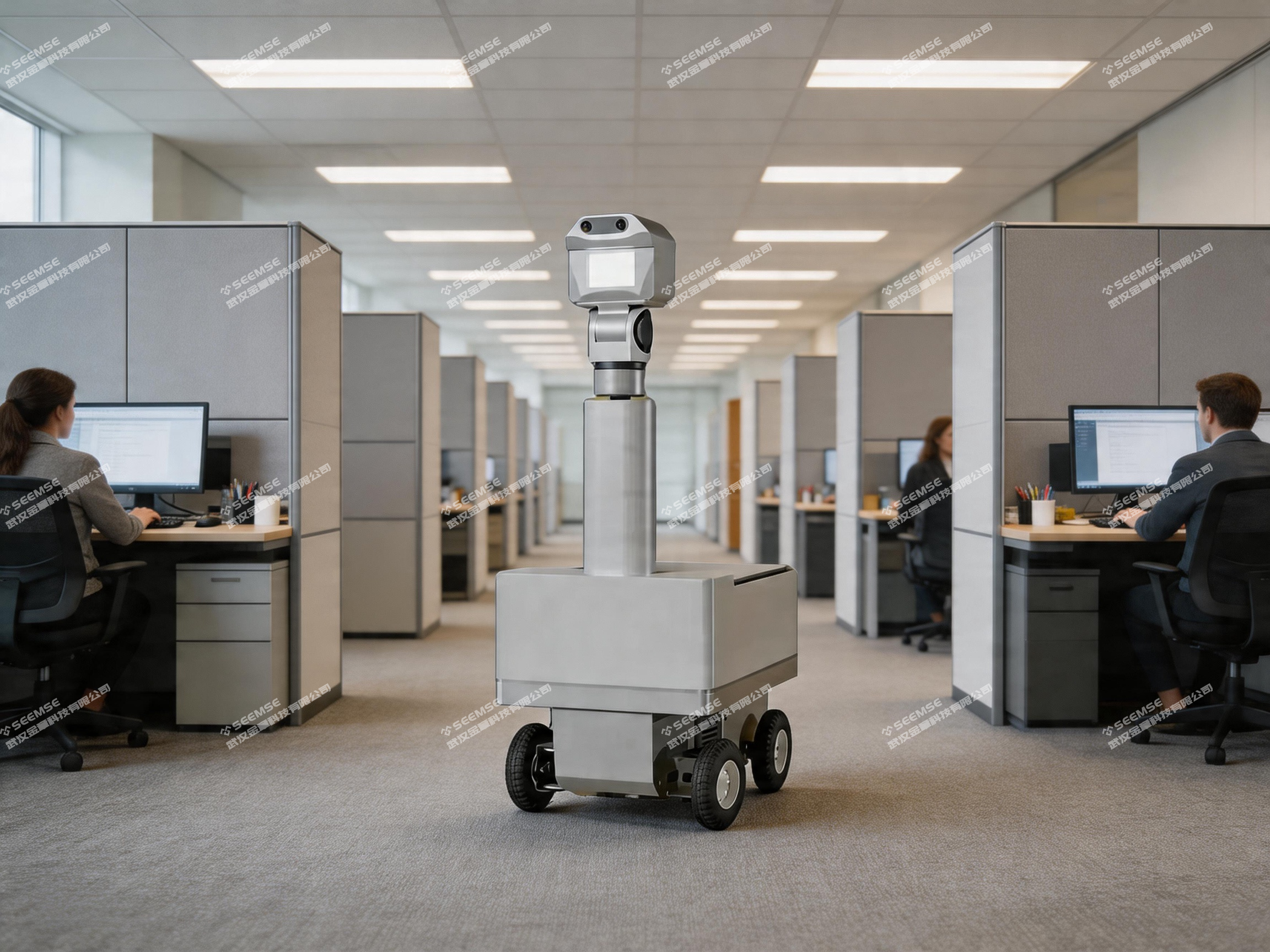
Document/Express Circulation in Office Buildings
In super high-rise office buildings, express deliveries and internal documents need to circulate between the front desk, companies, and departments. The robot picks up items from the front desk or mailroom and autonomously takes elevators to deliver them to company reception desks or designated workstations on each floor. Scheduled delivery is supported; users place orders through the office system and specify delivery times. Integrated with the building property management system, it automatically obtains floor layouts and access permissions. This solves the 'last 100 meters' delivery challenge in office buildings.
Recommended configuration: Differential chassis + enclosed cargo box + elevator linkage + office system integration
Daily Necessities Delivery in Apartments/Talent Housing
In long-term rental apartments and talent apartments, tenants have daily delivery needs such as laundry delivery, supermarket goods, and food delivery. The robot picks up items from service points (laundry room, convenience store, food delivery locker) and delivers them to tenants' doorsteps. 24-hour service is supported; tenants can schedule delivery times through the APP and collect items upon arrival home. Apartment operators can use this as a value-added service to improve tenant satisfaction and renewal rates.
Recommended configuration: Differential chassis + replaceable cargo box + access control linkage + apartment management system integration
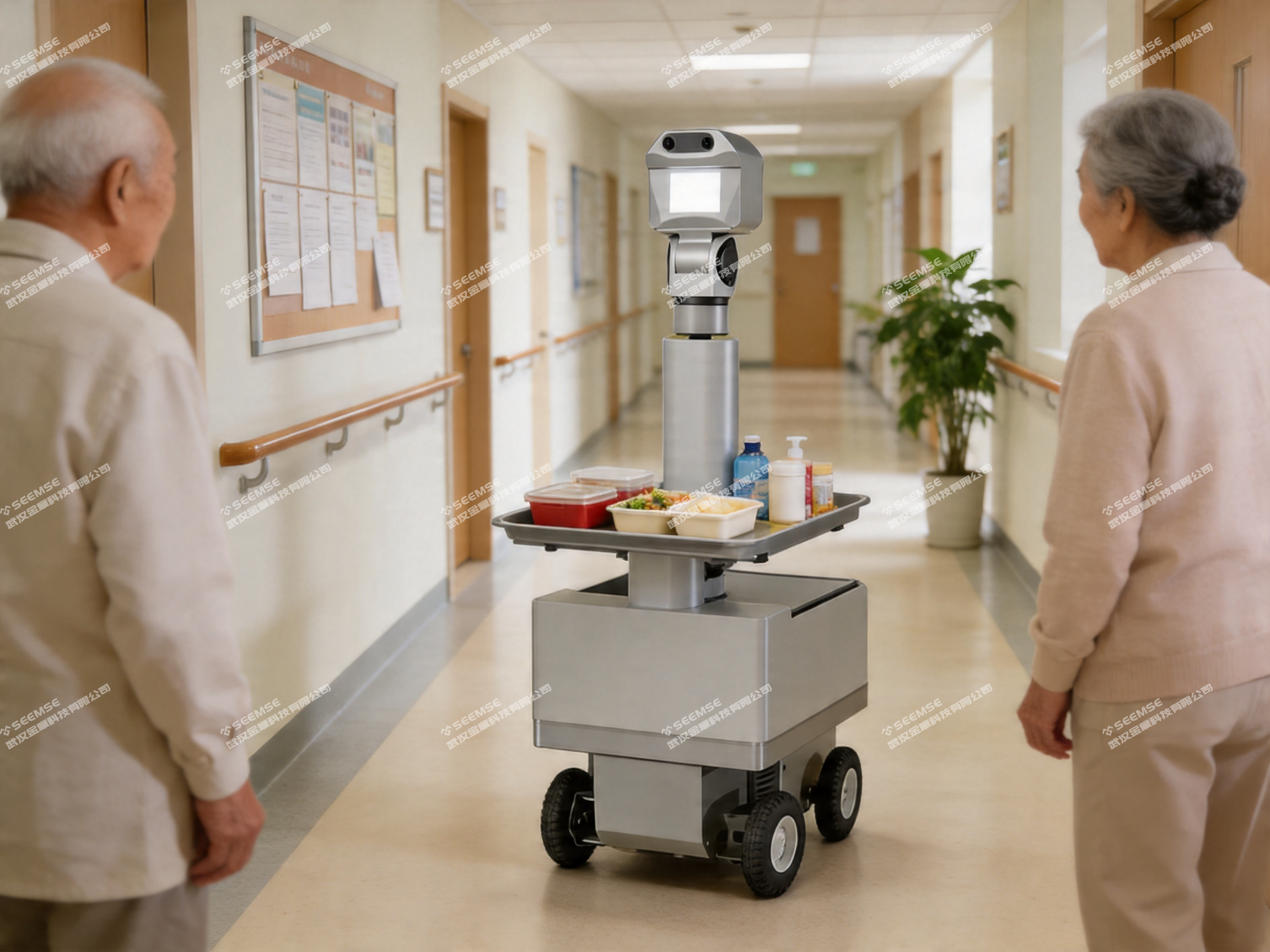
Elderly Assistance Delivery in Senior Communities
In senior communities, elderly residents have limited mobility, and the delivery of medicines, meals, and daily necessities is a rigid need. The robot delivers items from the community cafeteria, pharmacy, and supermarket to the doors of elderly residents' rooms. Voice interaction is supported, and elderly residents can call the robot by voice. Linked with the emergency call system, elderly residents can trigger an emergency call while receiving deliveries. This reduces walking for the elderly and lowers the risk of falls.
Recommended configuration: Differential chassis + enclosed cargo box + voice interaction + emergency call linkage
Item Delivery in Airport Terminals
In large airport terminals, lost items, duty-free goods, and documents required at boarding gates need to be delivered quickly within the terminal. The robot picks up items from lost and found, duty-free shops, and service centers and autonomously navigates to designated boarding gates or the passenger's current location. Integrated with the airport information system, it obtains passenger location and flight information in real time. This solves the inefficiency of cross-area delivery within terminals.
Recommended configuration: Omnidirectional wheel chassis + enclosed cargo box + real-time positioning and tracking + airport system integration
Document Delivery at Convention and Exhibition Centers
In large convention and exhibition centers, exhibitors need to deliver documents and materials from service desks to booths and recover them during dismantling. The robot is deployed at service desks; exhibitors place orders through the APP or on-site terminals; after loading, the robot autonomously navigates to the booth. Booth locations can be dynamically adjusted according to the map, and the robot adapts automatically. This solves the problem of extensive manual errands during exhibitions and reduces labor costs.
Recommended configuration: Omnidirectional wheel chassis + open tray + booth navigation + on-site call terminal
Automatic Book Return and Shelving in Libraries
In university or public libraries, books returned by readers need to be transported from return slots to sorting areas and then reshelved. The robot transports returned books from return slots to the sorting area and cooperates with the automatic sorting system to complete classification. After sorting, the robot transports books to the corresponding shelf areas, assisting librarians with shelving. The library management system records book locations throughout the process, allowing precise positioning when readers search.
Recommended configuration: Differential chassis + multi-layer material rack + library management system integration
Part 3: Auxiliary Applications
Night Security Patrol
In office buildings, data centers, warehouses, and parks, there are few people at night, and security inspections cannot be interrupted. The robot autonomously patrols along preset routes, using low-light cameras and infrared thermal imaging to inspect key areas and detect abnormal intrusions, blocked fire passages, water pipe leaks, unclosed doors and windows, etc. When abnormalities are found, it immediately pushes alarm images and location information to the security center and triggers audible and visual alarms. Multiple robots can patrol collaboratively by area, with unified cloud scheduling.
Recommended configuration: Omnidirectional wheel or differential chassis + low-light camera + infrared thermal imaging + gas sensor + alarm push
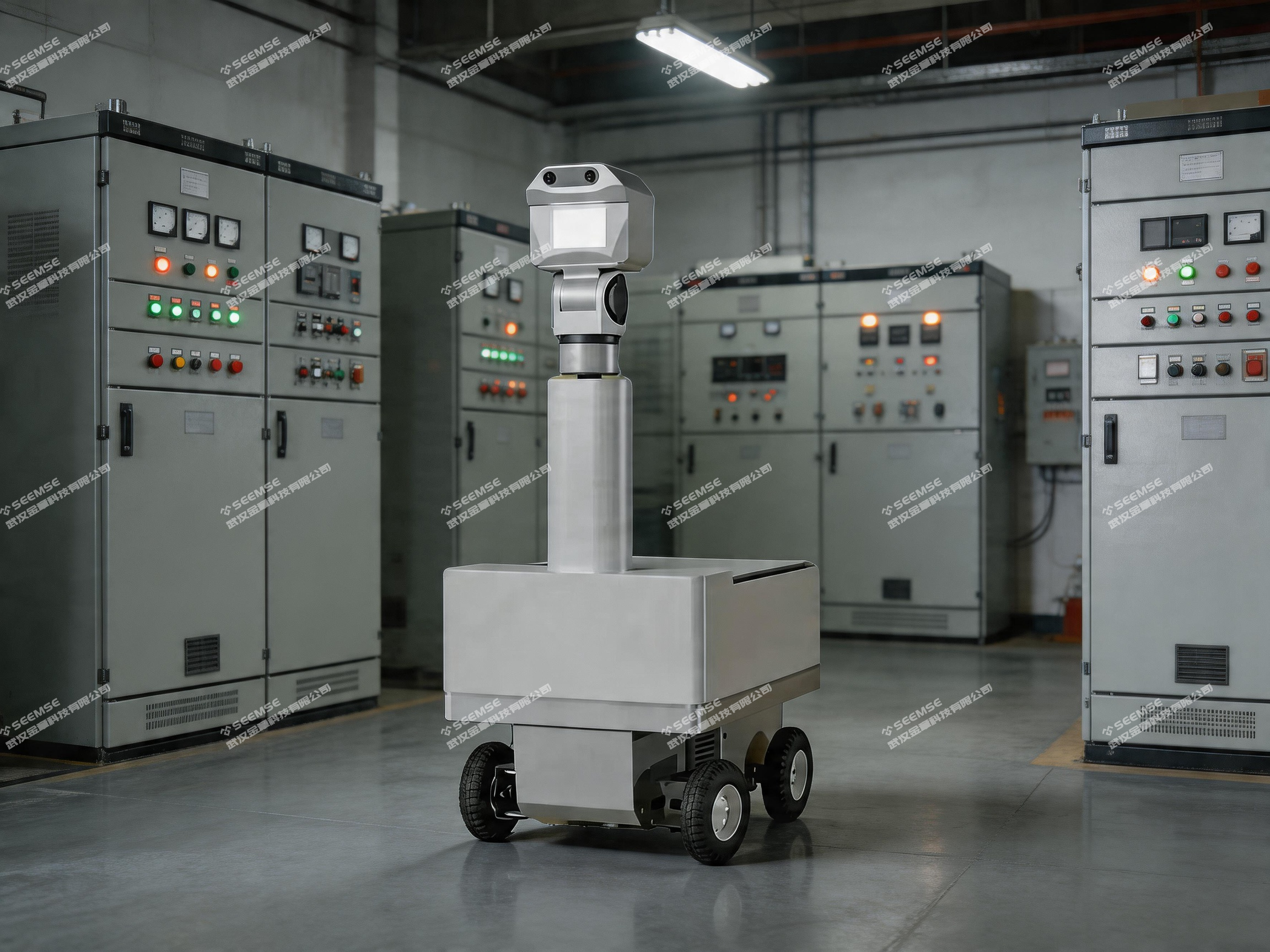
Equipment Room/Power Distribution Room Inspection
In equipment-intensive areas such as power distribution rooms, data center equipment rooms, air-conditioning equipment rooms, and water pump rooms, equipment needs to run 24 hours a day. The robot conducts scheduled inspections along preset routes; a lifting mast raises the HD camera and infrared thermal imager to the height of equipment panels to photograph indicator light status and instrument readings and detect equipment surface temperature distribution. A noise sensor is equipped to detect abnormal operating sounds. When abnormalities are found, alarms are issued immediately, and inspection data automatically generates reports for traceable analysis.
Recommended configuration: Omnidirectional wheel chassis + lifting mast + HD camera + infrared thermal imaging + noise sensor
Pipeline/Valve Area Inspection
In pipe galleries and valve group areas of chemical plants, pharmaceutical workshops, and food factories, the robot patrols along preset routes, uses visual recognition to check whether valve open/close states are consistent with the central control system, uses infrared thermal imaging to detect temperature anomalies caused by leaks, and is equipped with gas sensors to monitor harmful gases. When incorrect valve positions are found, the version equipped with a robotic arm can rotate the valve handwheel for adjustment under remote control.
Recommended configuration: Omnidirectional wheel chassis + infrared thermal imaging + gas sensor + optional robotic arm
Warehouse Shelf Inventory Counting
In large warehouses, traditional manual inventory counting is time-consuming and error-prone. The robot travels along shelf aisles, raises RFID readers/writers or vision cameras to different heights via a lifting mast, automatically scans shelf labels, and compares them with the WMS system to complete inventory counting. It can execute automatically at night without affecting daytime operations. It supports high-frequency counting in key areas (such as daily counting of high-turnover goods) to promptly detect inventory discrepancies.
Recommended configuration: Omnidirectional wheel chassis + lifting mast + RFID reader/writer + HD camera + WMS integration
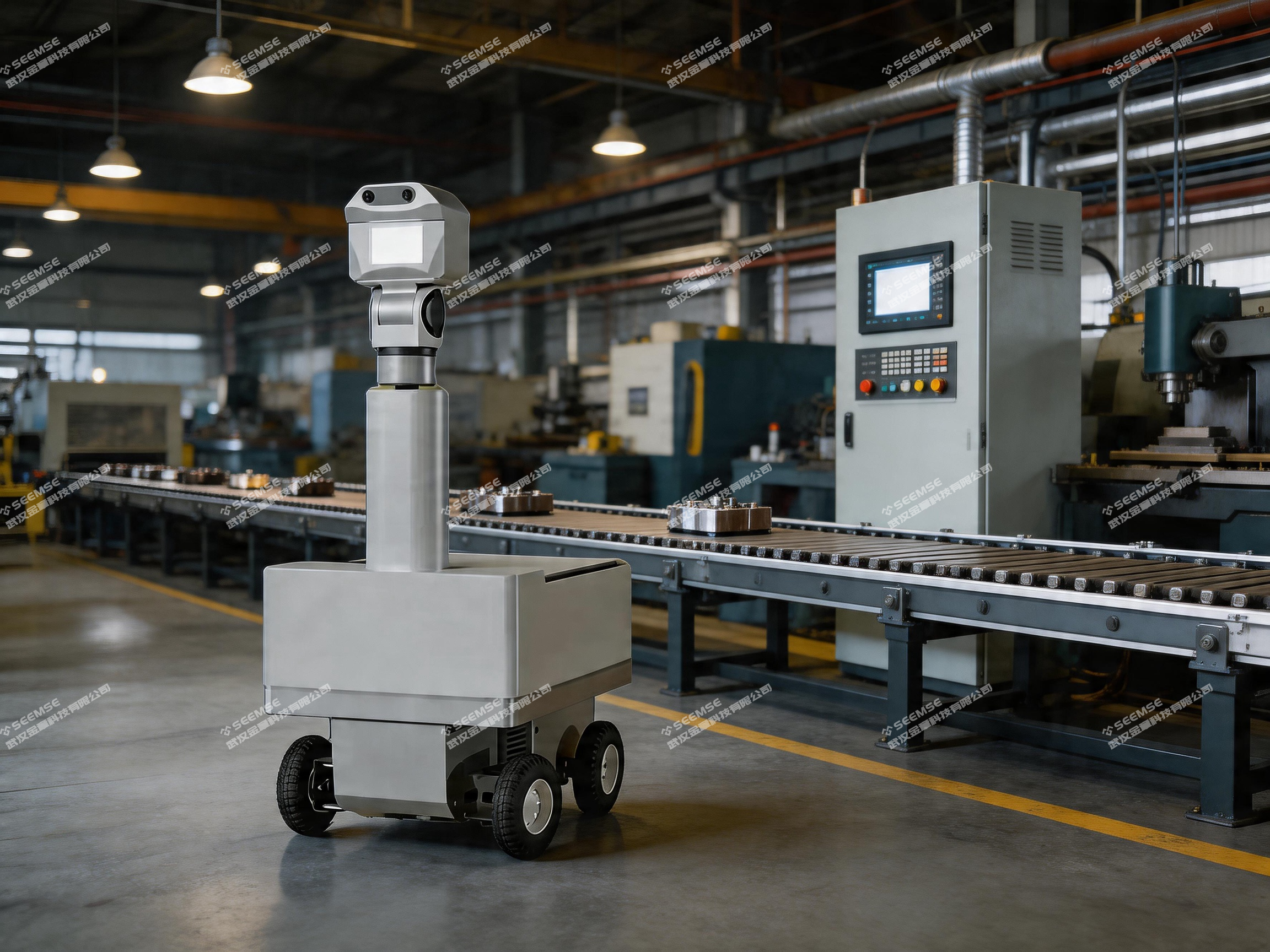
Production Line Equipment Status Inspection
In manufacturing workshops, the robot conducts scheduled inspections of production equipment, electrical control cabinets, compressed air pipelines, etc. It uses vision modules to check equipment operating status indicator lights, pressure gauge readings, and oil level heights, and uses infrared thermal imaging to detect temperatures of motors, control cabinets, and terminal blocks. When abnormalities are found, alarms are issued immediately; operators can confirm the situation through remote images and, if necessary, remotely control the robotic arm to complete simple handling (such as pressing a reset button).
Recommended configuration: Omnidirectional wheel chassis + lifting mast + HD camera + infrared thermal imaging + MES integration
Assisted Assembly (Robotic Arm)
At precision assembly workstations, operators frequently need screws, washers, and connectors of different specifications. The robot parks beside the workstation, receives commands via voice or foot switch, and picks corresponding parts from a material tray to hand to the operator. After assembly is completed, the robot can take finished parts and place them on a finished-product tray. Equipped with force sensors and dexterous hands, it can also assist with simple assembly actions such as alignment, pressing, and snapping.
Recommended configuration: Omnidirectional wheel chassis + robotic arm (with dexterous hand) + force sensor + 3D vision + voice/foot trigger
Automatic Loading and Unloading (Robotic Arm)
Beside standalone equipment such as CNC machine tools, injection molding machines, and coordinate measuring machines, the robot handles blank loading and finished-product unloading. The robot picks up blanks to be processed from trays or material racks, moves to the equipment door, and after the equipment completes the previous cycle and opens the door, the robotic arm reaches into the working cavity to take out the finished part, then places the blank into the fixture. With a quick-change plate, grippers or suction cups can be quickly changed according to workpiece shape, adapting to multiple workpiece types.
Recommended configuration: Omnidirectional wheel chassis + robotic arm (with quick-change plate) + gripper/suction cup + PLC linkage
Door/Button Operation (Robotic Arm)
During inspections, if equipment alarm lights are on or cabinet doors are not closed, operators can confirm the situation through remote images and remotely control the robotic arm to complete simple handling. The robotic arm can press reset buttons on equipment panels, flip selector switches, close cabinet doors, etc. For situations requiring viewing inside the cabinet, the robotic arm can first open the cabinet door, wait for the camera to finish photographing, and then close it. This achieves a closed loop from 'finding a problem' to 'solving the problem'.
Recommended configuration: Omnidirectional wheel chassis + lifting mast + robotic arm (with two-finger gripper) + remote control
Foreign Object Picking/Aisle Clearing (Robotic Arm)
When small obstacles are found in aisles during inspections (such as scattered parts or packaging waste), the robotic arm can pick them up and move them aside to restore aisle clearance. For goods that fall from shelves in warehouses, the robotic arm can pick them up and place them in a recovery basket. Small aisle blockages can be resolved without manual intervention, ensuring the passage safety of the robot itself and other operating vehicles.
Recommended configuration: Omnidirectional wheel chassis + robotic arm (with gripper) + visual recognition
Laboratory Automation Operations (Robotic Arm)
In biological laboratories, the robot can work with a robotic arm to complete simple repetitive operations, such as opening/closing caps (test tubes, centrifuge tubes), sample code scanning, pipetting assistance, and placing samples onto instrument trays. It collaborates with laboratory automation equipment (such as automated workstations) to form semi-automated experimental workflows. Laboratory personnel can operate remotely, reducing exposure time in front of hazardous reagents.
Recommended configuration: Differential chassis + robotic arm (with dexterous hand) + 3D vision + LIMS integration
Teaching and Research Platform
In majors such as automation, robotics engineering, and mechatronics at universities, the robot serves as a teaching and experimental platform. Students can learn course content such as mobile robot motion control, SLAM navigation algorithms, path planning, sensor fusion, and robotic arm motion planning on real hardware. SDK development kits and ROS interfaces are provided to support secondary development and algorithm verification. Teachers can use the robot to build experimental demonstration systems and visually demonstrate automated operation workflows in class.
Recommended configuration: Differential chassis + LiDAR + depth camera + SDK/ROS interfaces
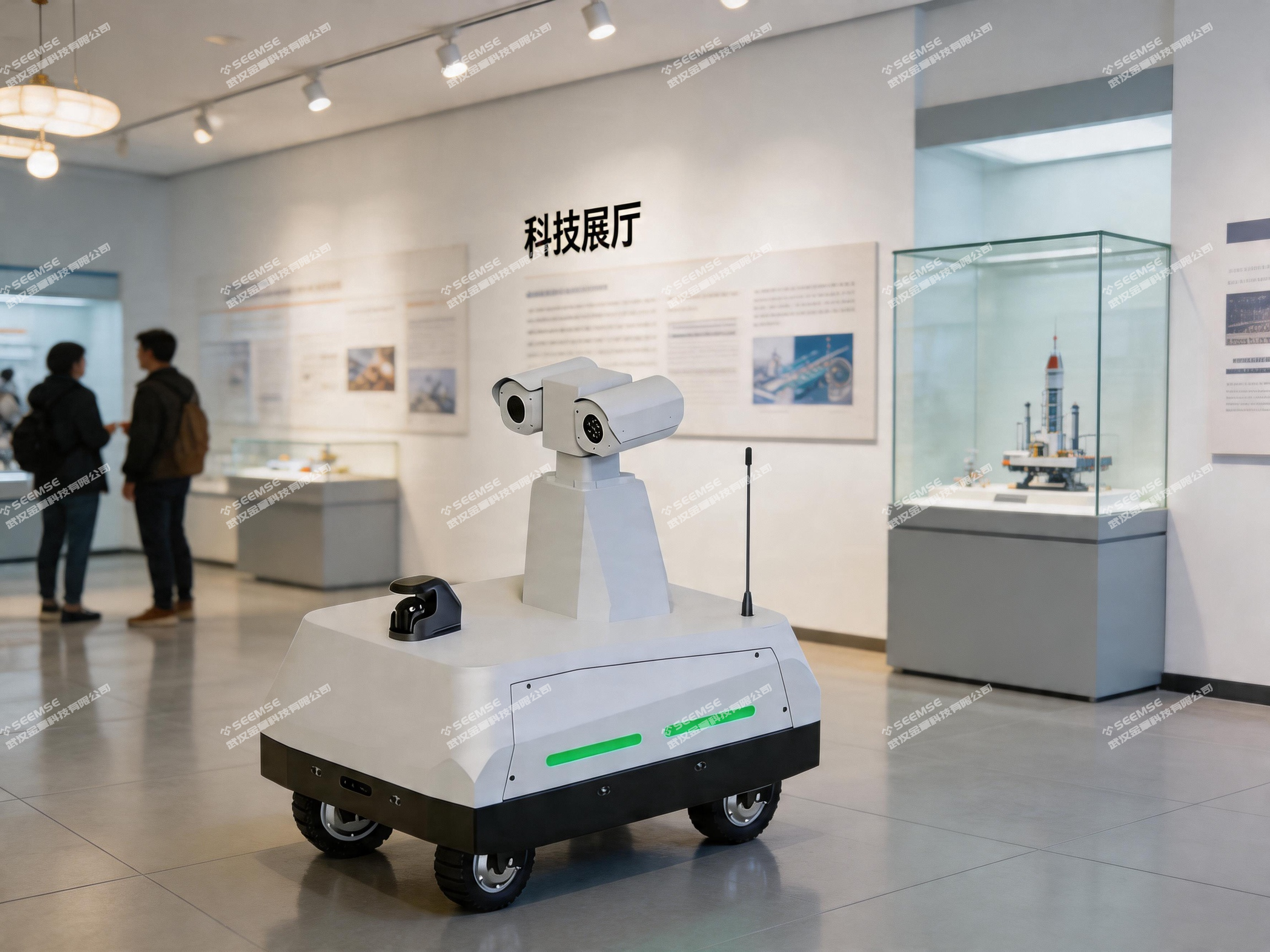
Showroom/Science Museum Guided Tours
In corporate showrooms, science museums, exhibitions, and other venues, the robot handles visitor reception and exhibit explanations. After identifying visitor identity, the robot plays customized welcome messages and guides visitors along preset routes through exhibition areas. Upon reaching an exhibit, the robot automatically triggers linkage with large screens and lighting and plays corresponding explanation content. The backend can collect statistics on dwell time and interaction frequency in each exhibition area, providing data reference for exhibition optimization.
Recommended configuration: Differential chassis + touchscreen + voice interaction + robotic arm (interactive demonstration)
Hotel/Mall Guidance Services
In hotel lobbies, shopping malls, and large transportation hubs, the robot provides inquiry answering, route guidance, shop recommendations, and other services. Users interact via voice or touchscreen, and the robot can lead users to destinations (such as a shop, restroom, or elevator). Multi-language support is available, suitable for venues involving foreign visitors. The backend can analyze common user questions and high-frequency destinations to optimize service resource allocation.
Recommended configuration: Omnidirectional wheel chassis + touchscreen + voice interaction + indoor positioning and navigation
Smart Construction Site Material Management
At construction sites (areas with hardened roads), small tools, consumables, and fasteners need to be transported from warehouses to various work points. The robot delivers materials to designated work areas and simultaneously inspects whether material stacking is standardized and fire passages are unobstructed. Dust-proof protective kits are equipped to adapt to construction site environments. Integrated with the site management system, it records material requisition and consumption, reducing waste and loss.
Recommended configuration: Differential chassis (reinforced) + open tray + dust protection + construction site system integration
Agricultural Greenhouse Environmental Inspection
In large-scale agricultural greenhouses (with hardened passages), the robot collects environmental parameters such as temperature and humidity, light intensity, and CO₂ concentration along inspection routes and uses multispectral cameras to photograph crop growth status. Data is uploaded to the agricultural IoT platform to assist farmers in determining irrigation, fertilization, and ventilation timing. It replaces manual greenhouse-by-greenhouse inspections and is especially suitable for high-temperature and high-humidity greenhouse environments.
Recommended configuration: Differential chassis + temperature/humidity sensor + multispectral camera + agricultural IoT integration